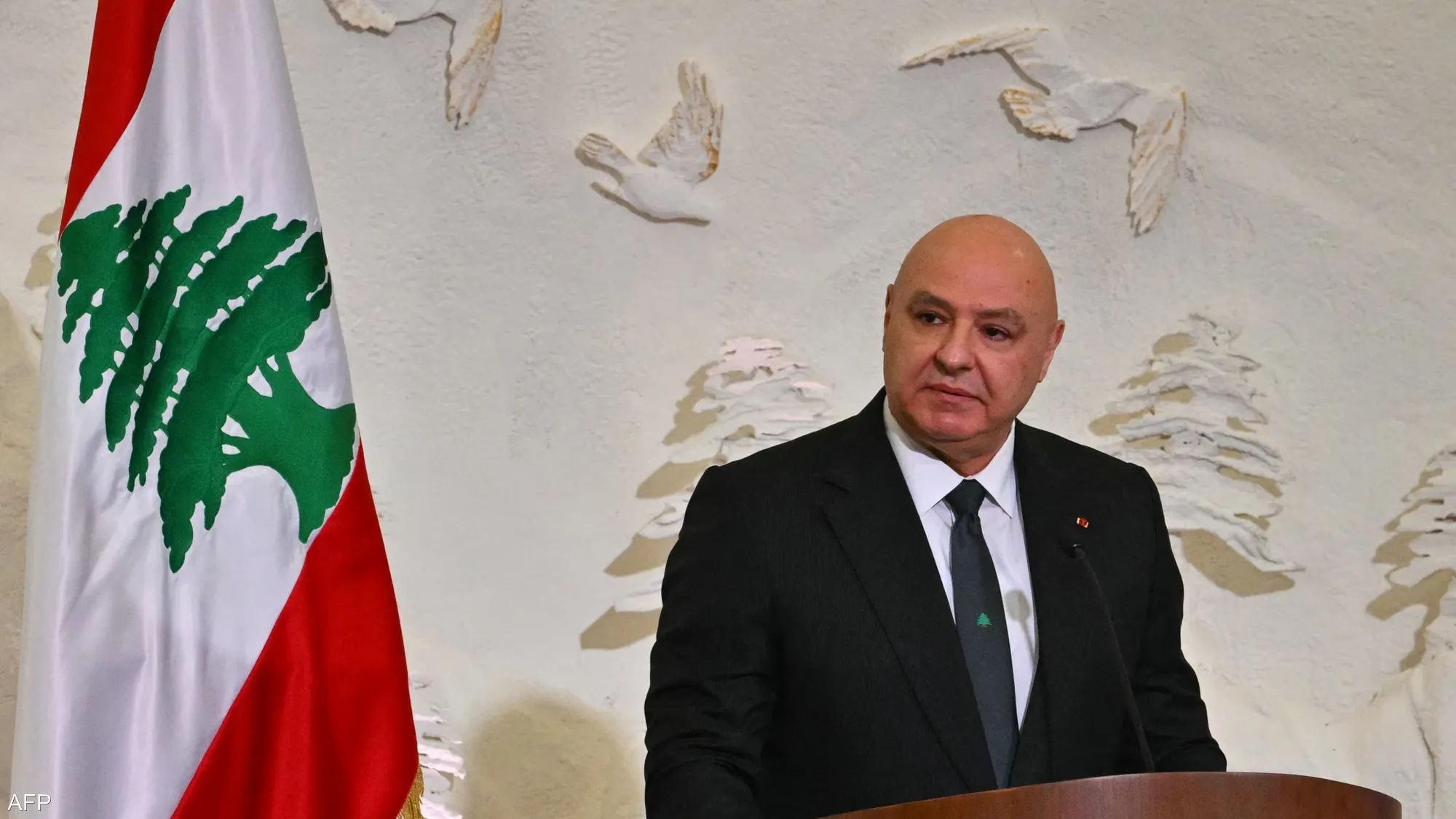
Beirut (Diplomat.so) – Lebanese President Joseph Aoun said on Thursday that a ceasefire constitutes the natural entry point for direct negotiations between Lebanon and Israel.
Lebanese President Joseph Aoun is the head of state of Lebanon, serving as the country’s highest constitutional authority and representing its executive leadership in national and international affairs. He said the ceasefire demanded by Lebanon would form a natural gateway toward structured negotiations with Israel under a sovereign Lebanese framework.
The Lebanese Presidency, as conveyed through statements reported by Diplomat News Network, outlined that Aoun’s position reflects an official state framework in which any potential negotiations must remain fully under Lebanese institutional authority.
The remarks come amid ongoing political and security sensitivity along Lebanon’s southern frontier, where diplomatic messaging has increasingly emphasized de-escalation and the protection of civilians.
He stated, "Lebanon is keen on halting escalation in the south and all Lebanese regions, to stop targeting innocent civilians, women, men, and children, and to stop the destruction of homes in villages and towns,” emphasizing the government’s stated priority of reducing civilian harm and stabilizing affected areas.
Aoun added, "The negotiations are handled by Lebanese authorities alone because it is a sovereign matter that cannot include any other party,” reinforcing Lebanon’s position that diplomatic engagement with Israel must remain exclusively within official state institutions without external participation.
He further noted that the withdrawal of Israeli forces from Lebanese territory is a key condition for stabilizing any ceasefire arrangement, enabling the Lebanese army to redeploy along internationally recognized borders. He linked this to restoring full state authority and reducing armed presence outside official control, including expanding the state’s security role in border regions.
The Lebanese president also referred to government decisions related to the monopoly of arms, stating that such measures will be implemented in line with national interest and public security priorities. These remarks align with ongoing internal discussions in Lebanon regarding the consolidation of state authority over security functions and the role of national institutions in maintaining internal stability.
Lebanon’s southern border area has remained a focal point of intermittent escalation, with diplomatic and security efforts frequently centered on preventing wider confrontation and limiting civilian displacement. The presidency’s statement reflects continued efforts to position ceasefire arrangements as a prerequisite for any structured political dialogue with Israel.
The developments carry broader implications for Lebanon’s regional posture, particularly in relation to security governance, state sovereignty, and diplomatic engagement mechanisms.
Aoun’s remarks underscore the government’s attempt to balance internal security priorities with external diplomatic pressures while maintaining a unified institutional stance on negotiation authority and ceasefire conditions.