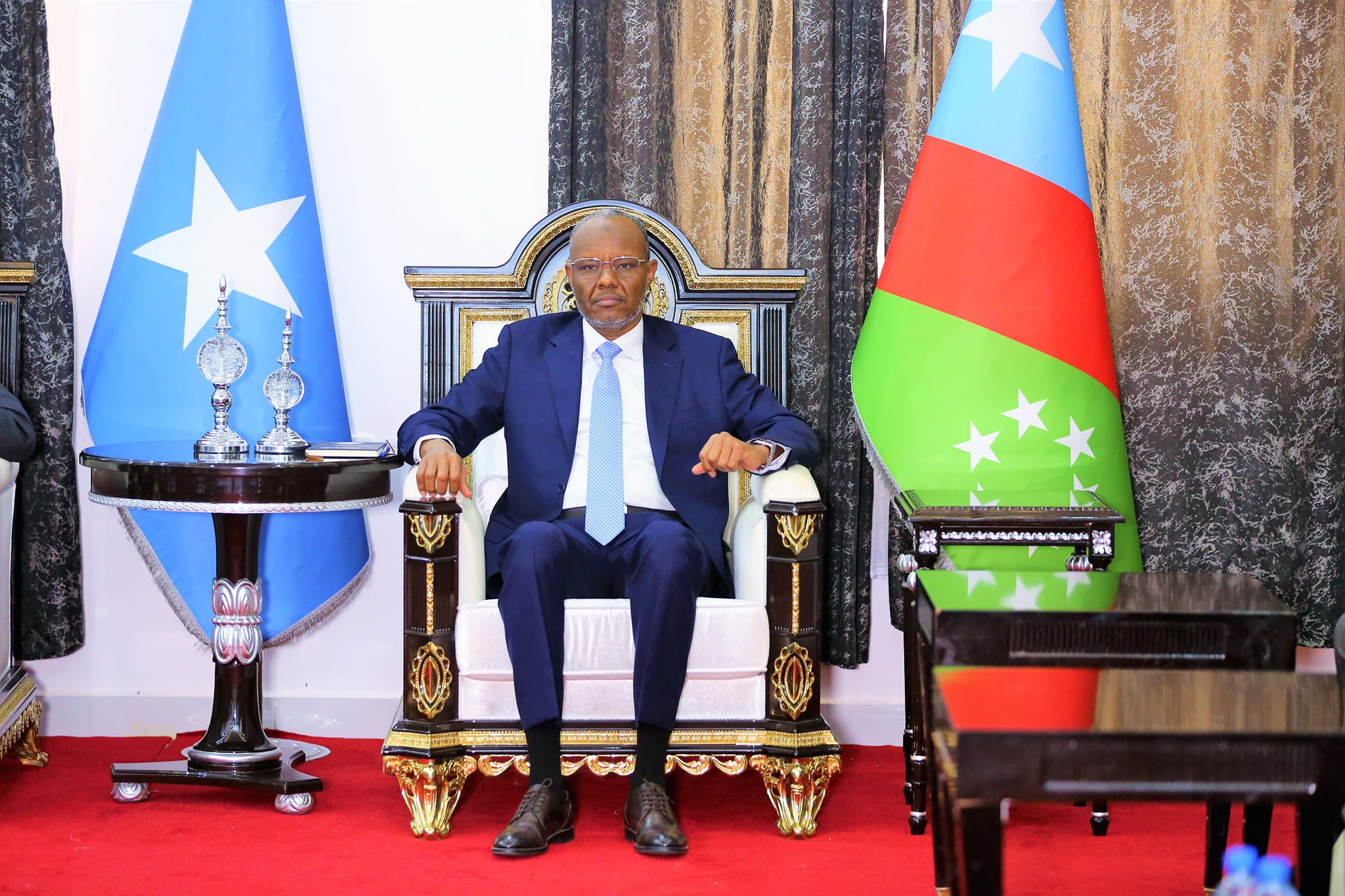
Mogadishu (Diplomat.so) – The Federal Government of Somalia on Saturday, condemned the illegal re-election of Abdiaziz Hassan Mohamed Laftagareen as President of Southwest State of Somalia, describing the process as unconstitutional, pre-arranged, and contrary to national electoral agreements after it was completed in less than 24 hours through the appointment of an electoral committee, the selection of lawmakers, and his subsequent return to office.
In a statement issued by the Ministry of Interior, Federal Affairs and Reconciliation of the Federal Government of Somalia, it said the process, conducted within 24 hours, which involved the formation of a regional electoral committee, the selection of members to the state House of Representatives, the election of a Speaker, and the re-election of the state president, did not meet constitutional and democratic standards and was entirely illegitimate. The ministry described the outcome as a "self-appointment” that runs counter to agreements reached by the National Consultative Council and undermines Somalia’s electoral framework.
The Federal Government of Somalia has described the unauthorized election held today in Baidoa, the administrative capital of Bay Region, as null and void, calling it an illegal, pre-planned power grab that violates national law, the agreements of the National Consultative Council, and the country’s constitutional framework.
"The process observed in Baidoa does not constitute a legitimate election but rather a predetermined political exercise lacking transparency, competition, and legal grounding,” the ministry said in its statement.
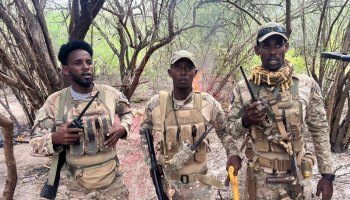
Witnesses in Baidoa reported a heavily restricted environment around key government facilities, including the city’s airport, where armed militia personnel were seen deployed around the premises. Several local politicians told Diplomat News Network that potential contenders were unable to access the venue or participate in the process.
"There was no open political space for competition,” said a regional lawmaker, speaking on condition of attribution. "The process was tightly controlled from start to finish.”
Abdiaziz Laftagareen reportedly deployed militias aligned with his clan to close Baidoa airport, blocking flights and preventing political rivals and candidates from arriving, a move widely seen as restricting competition and undermining the election process.
Former Southwest State President Abdiaziz Hassan Mohamed Laftagareen, who first assumed office in 2018, has been operating without a legal mandate for the past three and a half years; yet the controversial election in Baidoa declared him the sole candidate and reinstated him to office without any challengers.
"Reinstating a leader without broad consultation undermines ongoing federal-state relations and erodes public confidence in democratic processes,” said Fayow Mad Kerow, a political analyst in Baidoa. She emphasized that long-standing grievances from communities across Bay, Bakool, and Lower Shabelle regions have intensified in response to Laftagareen’s continued hold on power.
Government sources assert that the unilateral action violates fundamental principles of governance and could impede reconciliation and democratization efforts in Southwest State. Officials stress that elections must reflect genuine public will, conducted transparently, fairly, and in accordance with constitutional law. "Only a legal and legitimate process can ensure accountability and restore trust in state institutions,” the Ministry of Interior statement noted.
Somalia has been engaged in efforts to transition from indirect, clan-based voting systems toward universal suffrage, with federal and regional leaders previously agreeing in principle to move toward one-person, one-vote elections.
Laftagareen had previously been among the leaders of Federal Member States who endorsed the principle that both federal and state-level elections should eventually be conducted through direct public voting, replacing the indirect model historically driven by clan elders and a limited number of delegates.
Observers warn that the latest developments could exacerbate political tensions and increase the risk of localized unrest. Analysts point to the strategic importance of Southwest State, which encompasses key agricultural and trade corridors, noting that instability could have ripple effects on internal security and economic activity.