This article is by: Ali Abdi Ali Hoshow
The content of this [report/study/article/publication…] does not reflect the official opinion of the DIPLOMAT NEWS NETWORK.
The views expressed in this article are the author’s own.
-
Introduction
Somalia, situated along the Horn of Africa, boasts a coastline of approximately 3,333 kilometers that stretches along the Indian Ocean, making it one of the longest in Africa (Food and Agriculture Organization [FAO], 2020). This extensive coastline harbors rich and diverse marine ecosystems that sustain a variety of fish species, marine mammals, and coral reefs. For millions of Somali coastal residents, these waters are not merely a natural resource but a vital lifeline, providing food security, livelihoods, and socio-economic stability (Sheikh & Warsame, 2021). Small-scale artisanal fishers rely on the abundance of tuna, lobsters, shrimp, and other marine species for both subsistence and income, forming the backbone of coastal economies.
Despite this critical importance, Somalia’s marine resources face a profound threat from Illegal, Unreported, and Unregulated (IUU) fishing, which has persisted over decades due to weak governance, political instability, and the absence of robust maritime enforcement (Haghighi et al., 2021). IUU fishing refers to activities conducted by vessels that disregard national and international regulations, often employing unsustainable methods and exploiting governance gaps to maximize catch (FAO, 2020). In the Somali context, foreign fleets have historically targeted the country’s rich fisheries, depleting resources essential to local communities while causing ecological damage to marine habitats.
This article examines the multifaceted issue of IUU fishing in Somali waters through an analytical lens, highlighting the environmental, economic, and governance challenges it poses. It explores current measures to mitigate these challenges, evaluates policy interventions, and provides insights into sustainable approaches for managing Somalia’s marine resources.
Understanding IUU Fishing in Somali Waters
IUU fishing encompasses three primary categories: illegal fishing (conducted in violation of national laws), unreported fishing (not reported or misreported to relevant authorities), and unregulated fishing (occurring in areas without effective governance or regulation) (FAO, 2020). In Somalia, all three forms are prevalent, particularly in the aftermath of state collapse in the early 1990s, which left the Somali Exclusive Economic Zone (EEZ) largely unmonitored and vulnerable to exploitation.
Foreign trawlers and industrial fleets have capitalized on this governance vacuum, harvesting significant quantities of high-value species such as tuna, swordfish, and lobsters without proper licensing or oversight (Haghighi et al., 2021). Such operations not only reduce the availability of resources for artisanal fishers but also contribute to overfishing, disrupting marine food webs and threatening species that are critical to ecological balance. For example, the indiscriminate use of bottom trawlers has been linked to the destruction of coral reef habitats along the Somali coastline, which serve as breeding grounds for numerous fish species and as nurseries for juvenile marine life (United Nations Environment Programme [UNEP], 2022).
Critically, IUU fishing undermines the sustainability of marine ecosystems, making them more susceptible to the compounded impacts of climate change, including rising sea surface temperatures and ocean acidification. The degradation of these ecosystems diminishes biodiversity, threatening endangered species such as sea turtles, whale sharks, and dugongs (Sheikh & Warsame, 2021). From a scholarly perspective, IUU fishing in Somalia exemplifies the complex interaction between environmental degradation and weak governance, illustrating how socio-political instability can amplify ecological vulnerability.
Socioeconomic Impacts on Coastal Communities
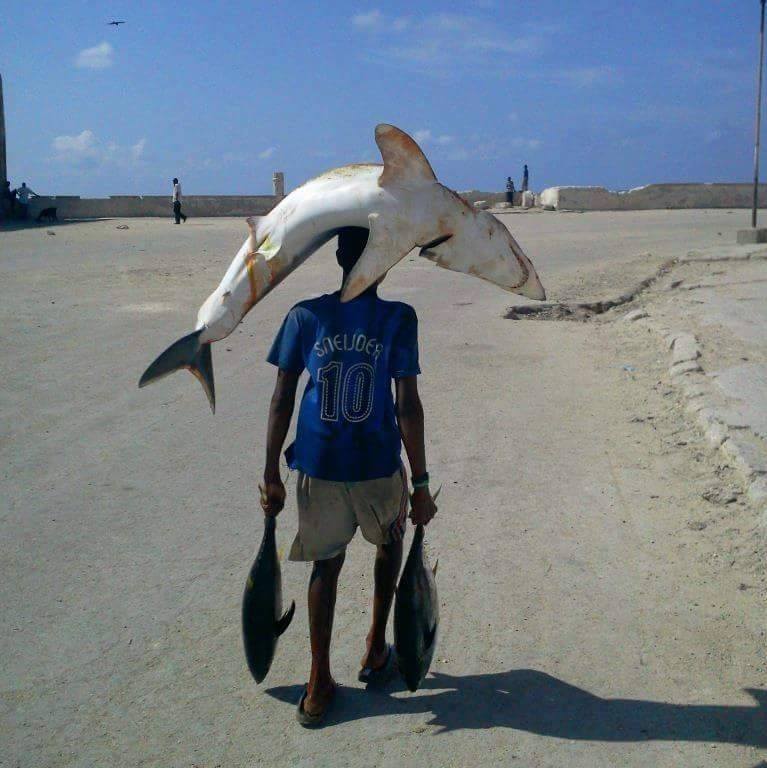
The consequences of IUU fishing extend far beyond ecological damage. Somali coastal communities, particularly in Puntland, Somaliland, and southern regions such as Kismayo and Mogadishu, are heavily dependent on artisanal fisheries. These communities rely on daily catches for protein consumption and as a primary source of income. Declining fish stocks caused by unregulated foreign fleets have resulted in reduced household earnings, increased food insecurity, and heightened vulnerability to poverty (Haghighi et al., 2021).
For example, reports indicate that in some fishing villages in Puntland, local fishers have seen daily catches drop by as much as 60% over the last decade due to overfishing by foreign vessels (Sheikh & Warsame, 2021). This reduction has direct economic and social consequences: families struggle to afford basic necessities, youth are pushed toward alternative livelihoods such as piracy or urban migration, and community resilience is weakened. The intersection of environmental and socioeconomic challenges highlights the systemic nature of IUU fishing as both an ecological and human development issue.
From a critical perspective, the Somali case challenges conventional fisheries management models by demonstrating that enforcing regulations alone is insufficient in the absence of community engagement, economic alternatives, and regional cooperation. Sustainable solutions must therefore integrate ecological, economic, and social dimensions to be effective.
Governance Challenges and Policy Gaps
Somalia’s maritime governance faces structural limitations that exacerbate IUU fishing. Decades of political instability, limited institutional capacity, and insufficient surveillance infrastructure have made monitoring and enforcing maritime law extremely difficult (UNEP, 2022). While the federal government and regional administrations have developed licensing frameworks, enforcement remains weak due to lack of patrol vessels, satellite monitoring, and coordination between coastal regions.
Moreover, the Somali coastline is extensive and sparsely monitored, providing ample opportunity for foreign fleets to operate undetected. Attempts to prosecute violators have historically been hindered by limited legal frameworks and the complexities of maritime jurisdiction (Haghighi et al., 2021). These gaps illustrate a broader governance challenge in fragile states: the inability to exert sovereign control over natural resources often leads to exploitation by external actors, with long-term consequences for both environmental sustainability and local livelihoods.
Scholars argue that effective governance in such contexts requires multi-level interventions, combining national legislation, regional collaboration, and international enforcement mechanisms. For example, partnerships with the Indian Ocean Tuna Commission (IOTC) and the FAO have helped establish monitoring frameworks, including vessel tracking systems and catch reporting standards (FAO, 2020). Nevertheless, these measures must be complemented by local community engagement and capacity building to create resilient enforcement and management structures.
Current Mitigation Efforts
Despite these challenges, Somalia has undertaken several initiatives to combat IUU fishing. The Somali federal government, in collaboration with regional administrations, has implemented licensing reforms aimed at regulating foreign fleets, improving maritime surveillance, and fostering transparency in fisheries management (UNEP, 2022). NGOs and civil society organizations have also been active in promoting community-based fisheries management, capacity building for local fishers, and advocacy for stronger international enforcement (Sheikh & Warsame, 2021).
Furthermore, technological tools such as satellite monitoring, automatic identification systems (AIS), and remote sensing have been introduced to track vessel activity in Somali waters. While these measures remain limited in scope, they represent important steps toward improving governance and reducing illegal fishing (Haghighi et al., 2021).
Critically, effective mitigation requires integrating these technological and regulatory measures with socioeconomic incentives. For instance, supporting alternative livelihoods, improving market access for artisanal fishers, and establishing marine protected areas can help align community interests with sustainable resource management. Such approaches are consistent with scholarly recommendations on integrated ocean governance, emphasizing the necessity of coupling ecological conservation with socioeconomic development (Sheikh & Warsame, 2021).
Policy Recommendations and Strategic Insights
To address IUU fishing comprehensively, Somalia must implement a multi-faceted strategy. Key recommendations include:
1. Strengthening Maritime Enforcement: Deploying additional patrol vessels, leveraging satellite surveillance, and establishing rapid response mechanisms to apprehend illegal vessels.
2. Community-Based Management: Engaging coastal communities in decision-making processes, enforcing local regulations, and supporting cooperative fisheries models.
3. Regional and International Cooperation: Collaborating with neighboring states, regional fisheries bodies, and international agencies to harmonize regulations, share intelligence, and prosecute violators.
4. Economic Incentives and Sustainable Practices: Providing training in sustainable fishing techniques, supporting market access for legal catch, and developing eco-labeling systems for artisanal fisheries.
5. Awareness and Journalism: Leveraging investigative journalism and media reporting to increase public understanding, drive policy advocacy, and encourage accountability.
Implementing these recommendations requires a holistic understanding of the interdependencies between ecological sustainability, economic development, and governance capacity. From a scholarly perspective, Somalia’s situation underscores the importance of adaptive, evidence-based policies that integrate environmental science, social dynamics, and institutional capacity.
Conclusion
IUU fishing in Somali waters represents a complex and multifaceted challenge with profound ecological, economic, and governance implications. The depletion of marine resources threatens biodiversity, undermines local livelihoods, and exacerbates socio-economic vulnerabilities along the Somali coastline. Addressing this challenge requires a coordinated approach that combines national and regional governance, technological monitoring, community engagement, and sustainable economic alternatives.
Journalism and public awareness play a pivotal role in this process, providing the evidence, narratives, and scrutiny necessary to drive policy reform and community action. By integrating ecological conservation with social and economic considerations, Somalia can reclaim its maritime sovereignty, protect its marine ecosystems, and safeguard the livelihoods of millions dependent on these vital waters.
Ultimately, the Somali case offers critical lessons for other fragile states facing similar challenges: sustainable ocean governance is not merely a technical or legal matter, but a complex socio-ecological enterprise that demands scholarly rigor, policy innovation, and public engagement.
References
Diplomat News Network. (2023). The power of ocean journalism: Protecting marine life and advancing conservation efforts. https://diplomat.so/articles/573/The-Power-of-Ocean-Journalism-Protecting-Marine-Life-and-Advancing-Conservation-Efforts
Food and Agriculture Organization. (2020). The State of World Fisheries and Aquaculture 2020. FAO. https://www.fao.org/state-of-fisheries-aquaculture
Haghighi, H., Mohamed, A., & Warsame, S. (2021). Challenges of fisheries governance in Somalia: Illegal fishing and community impacts. Journal of Maritime Policy, 12(3), 45–62.
Sheikh, M., & Warsame, H. (2021). Somalia’s fisheries and the fight against illegal, unreported, and unregulated fishing. African Journal of Marine Science, 43(2), 101–115.
United Nations Environment Programme. (2022). Marine pollution and conservation in East African coastal waters.