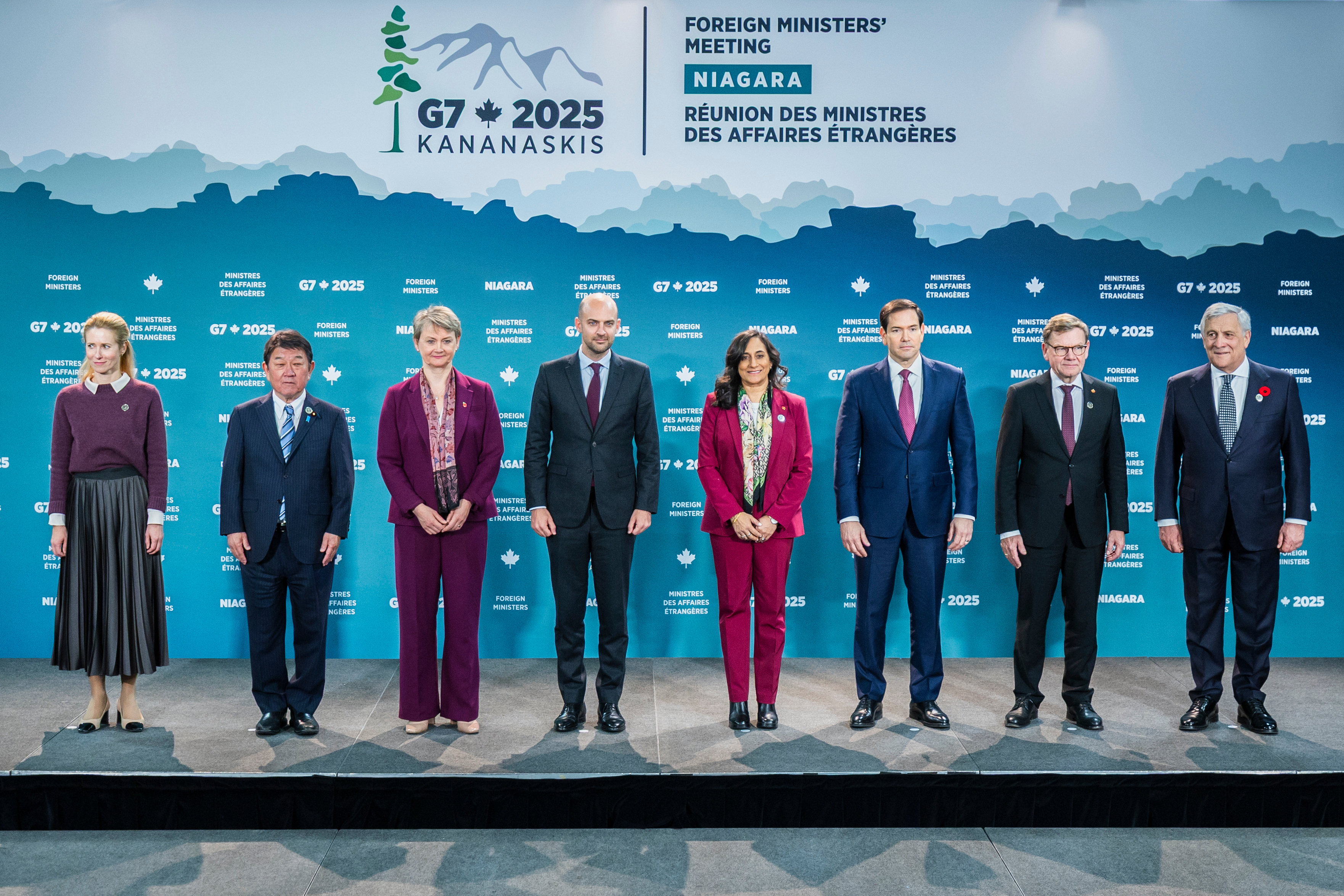
Brussels (Diplomat.so) - Foreign ministers of the Group of Seven on Saturday urged Iran to immediately and unconditionally stop its "unjustified" attacks across the region, issuing a joint statement from representatives of Canada, France, Germany, Italy, Japan, United Kingdom, and the United States, along with the High Representative of the European Union.
The statement underscored unified concern over a series of recent regional incidents involving missile and drone activity attributed to Iran and affiliated groups. It expressed solidarity with regional partners facing security pressures and emphasized the need to protect civilian populations and infrastructure, particularly in the energy sector.
"We strongly condemn the reckless attacks carried out by the regime against civilians and civilian infrastructure, including energy facilities,” the joint statement said, reflecting a coordinated diplomatic position among the participating governments. The ministers also reiterated their readiness to support the stability of global energy markets and to safeguard key maritime corridors.
In addition, the G7 highlighted the importance of maintaining freedom of navigation in critical waterways such as the Strait of Hormuz, a strategic passage through which a significant portion of the world’s oil shipments passes. Officials warned that any disruption in this corridor could have far-reaching consequences for international trade and energy prices.
On the ground, heightened vigilance has been observed in coastal and port areas across parts of the Gulf region. Maritime activity continues, though with increased security checks and a visible presence of patrol vessels. Some shipping operators have reported precautionary adjustments to routes and schedules amid elevated risk perceptions.
A maritime worker in the region said conditions have become more restrictive in recent days. "Security inspections at port entry points have increased, and movements are being monitored more closely than usual,” the worker said, describing a noticeable shift in operational procedures.
A regional analyst noted that the G7 statement reflects broader concerns about escalation and its economic implications. "The coordination among major economies signals an effort to deter further incidents while reassuring markets about energy supply continuity,” the analyst said, adding that sustained tensions could affect shipping insurance costs and global supply chains.
The developments come against a backdrop of ongoing exchanges of attacks in the region over recent weeks, raising concerns among governments and industry stakeholders about the potential for broader instability.