Beledweyne (Diplomat.so) - A rapidly escalating drought across southern and central Somalia is driving mass displacement, with severe shortages of food, water and pasture reported in Mudug, Hiiraan, Bakool and Gedo.
Officials confirmed Sunday that the failure of the 2025 seasonal rains has deepened an already fragile humanitarian situation, leaving rural households with limited survival options.
Field assessments show that prolonged heat, dried boreholes and extensive livestock losses have pushed families to leave long-established villages. In Bakool, displaced communities continue streaming into Hudur, while residents of Bulo Burte, Jalalaqsi and Beledweyne report near-complete depletion of available water sources.
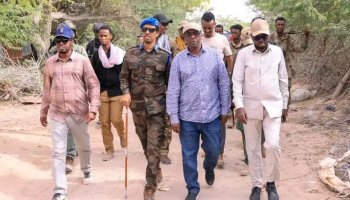
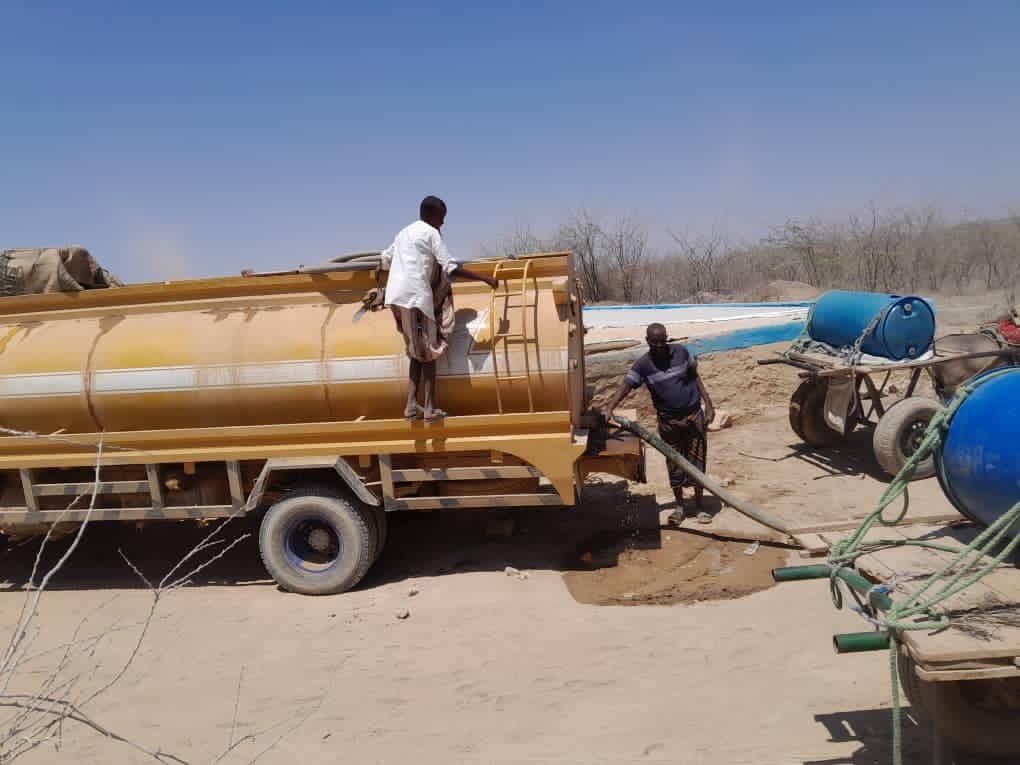
A 30-day emergency water-distribution initiative is now underway in the villages of Amalow and Hundubo in the southeastern outskirts of Beledweyne, where conditions have sharply worsened. Mohamed Dubo, Director of the Somalia Investment Promotion Office (SOMINVEST) at the Ministry of Planning, Investment and Economic Development of Somalia, said community networks organized the operation after witnessing a rapid decline in living conditions, prompting an urgent local response.
"Representatives of the Amalow Professionals’ Forum and local business leaders recognized that waiting for external assistance would inevitably cost lives,” Dubo said. He added that monitoring teams are now mapping water shortages across dispersed settlements to guide and strengthen the reach of upcoming relief operations.
Humanitarian agencies report a sharp rise in acute malnutrition among women and children, warning that the situation is worsening as access to essential health services declines. Several maternal and child-health centers across the affected districts have been forced to shut down after failing to secure the funding required to maintain NGO-supported operations, leaving vulnerable families with limited options for medical care and nutritional support at a time of escalating need.
Mohamed Shire, Director General of the Ministry of Planning, Investment and Economic Development of Somalia, told Somali National TV that the ministry is scaling up coordination efforts with humanitarian partners.
"We are consolidating district-level drought data daily to identify gaps and direct support where the pressure is highest,” Shire said, noting that strengthened information-sharing is essential to avoid uneven or delayed responses.
The Shabelle River, the primary water source for many towns throughout the Hiiraan, has fallen to exceptionally low levels due to prolonged dry conditions, slowing irrigation canals, reducing livestock watering points and forcing communities to travel longer distances for water as local authorities warn that continued depletion will place further pressure on both farming and household food security
In Bardaale, District Commissioner Mohamed Isack Hassan said communities are facing a different but equally severe challenge: complete dependence on rainfall in an area with no permanent river system.
He explained that shallow wells have dried, traditional catchment ponds have cracked, and pastoral families are walking long distances in search of water, often losing their remaining livestock along the way. Hassan added that the collapse of local grazing areas has led to heightened disputes over scarce resources, placing additional strain on vulnerable households.