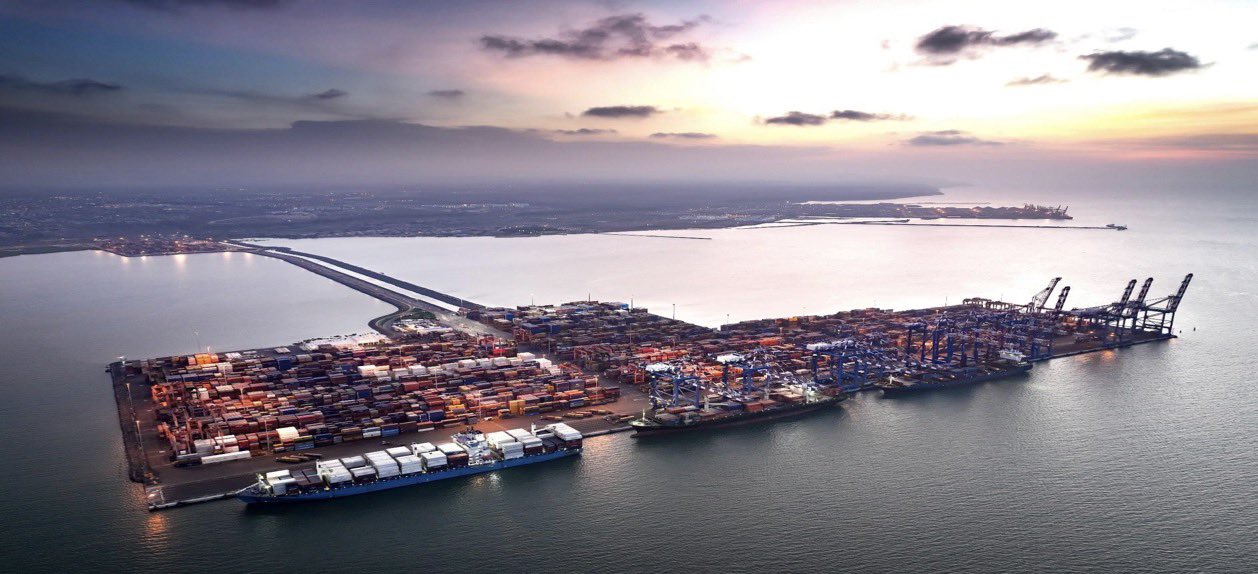
Djibouti (Diplomat.so) – Authority of Ports and Free Zones of Djibouti (APZFD)announced on Sunday, June 14, that Djibouti ranked third in Africa in the World Bank's Container Port Performance Index (CPPI) 2025, reflecting improved operational efficiency, reduced vessel turnaround times, and strengthened regional maritime competitiveness across its port infrastructure network.
The APZFD said the latest CPPI assessment, jointly produced by the World Bank and S&P Global Market Intelligence, places Djibouti among the continent’s leading logistics hubs, driven primarily by performance gains at the Doraleh Container Terminal, a key maritime facility located at the southern entrance of the Red Sea. Port authorities reported that ongoing modernization efforts have contributed to faster cargo handling cycles and improved berth productivity, particularly over the past year.
"This ranking is the result of sustained efforts over several years and a collective commitment to strengthening the competitiveness of our ports and logistics systems,” APZFD Chairman Aboubaker Omar Hadi said in a statement shared with Diplomat News Network. He added that continued investment in infrastructure and port management systems remains central to maintaining Djibouti’s regional standing.
At the Doraleh terminal, port activity on Sunday was described by workers as steady, with container cranes operating continuously and truck movements flowing in controlled sequences between storage yards and exit gates. A logistics supervisor at the facility, speaking on condition of attribution, said operations have become "noticeably more synchronized compared to previous years,” citing improved scheduling systems and digital coordination tools introduced by management.
A regional logistics analyst familiar with Red Sea trade corridors noted that Djibouti’s position in the CPPI reflects broader shifts in global shipping routes. "Djibouti’s performance signals how strategically located mid-sized ports can gain competitiveness through efficiency rather than scale alone,” the analyst said, emphasizing the country’s role in East Africa’s import-export network.
The CPPI framework evaluates ports based on indicators such as ship waiting time, berth productivity, and cargo handling efficiency. According to the methodology, ports that reduce idle vessel time while maintaining throughput consistency tend to achieve higher rankings, particularly in congested maritime corridors like the Red Sea and Indian Ocean gateway routes.
Djibouti’s improved ranking is closely linked to sustained investment in port infrastructure, including expansion of handling capacity, upgraded container tracking systems, and streamlined customs procedures. Officials argue that these measures have reduced bottlenecks that previously affected dwell times for vessels and cargo.
The development carries wider economic implications for the Horn of Africa, where Djibouti serves as a primary transshipment and trade access point for several landlocked neighbors. Strengthened port performance is expected to reinforce trade reliability, attract additional shipping lines, and enhance the country’s positioning in regional logistics competition.