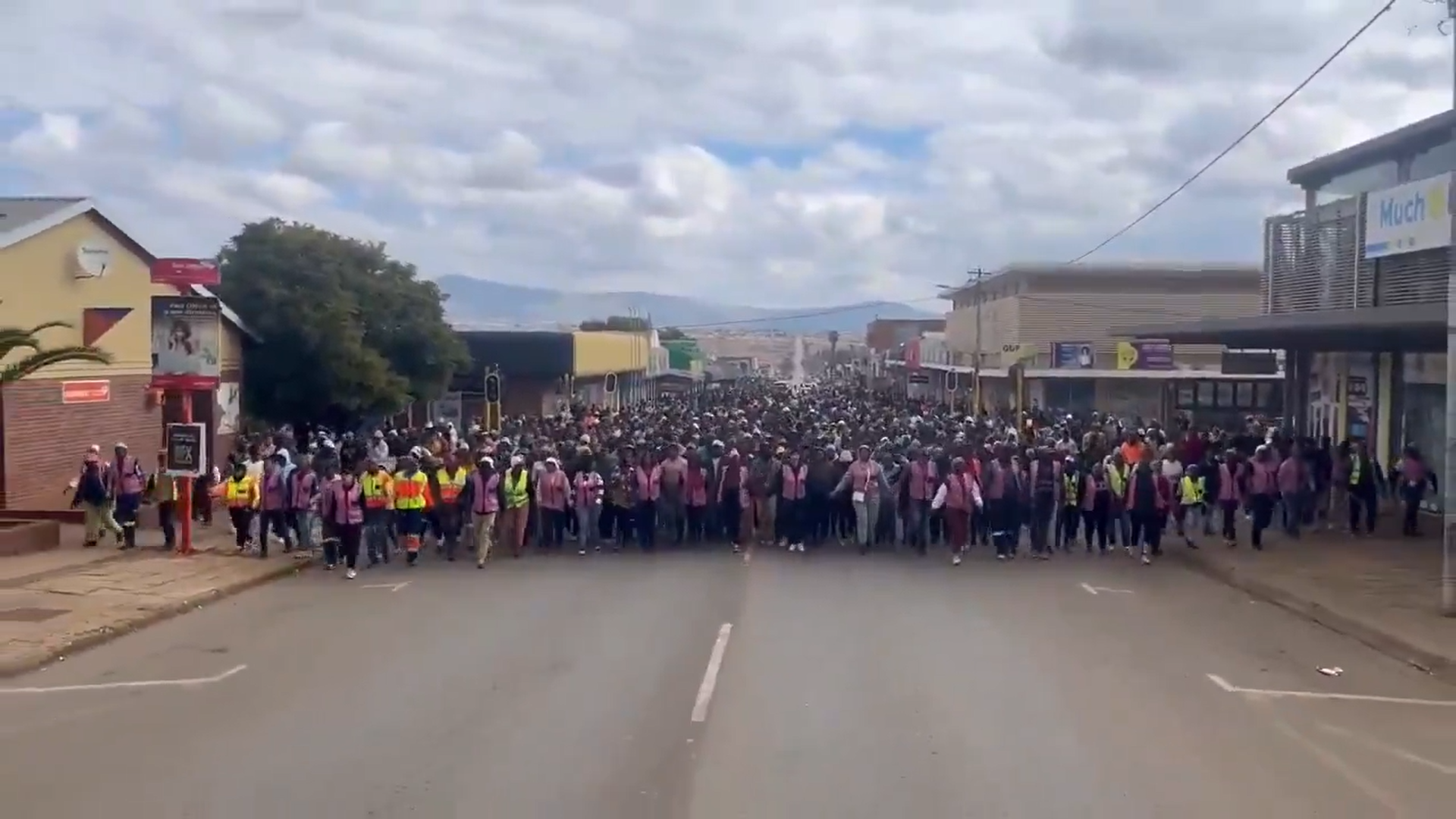
Durban (Diplomat.so) - South African Police Service (SAPS), in coordination with the National Joint Operational and Intelligence Structure (NATJOINTS), confirmed on Wednesday, July 1, 2026, that arrests were made following nationwide anti-migrant protests held on Tuesday, June 30, across Durban, Johannesburg, and Cape Town, as authorities investigate public disorder incidents and intimidation linked to undocumented migration tensions.
Security agencies said operations remained active overnight as police units and supporting forces monitored key urban corridors following the demonstrations, which drew thousands of participants across South Africa’s major economic centres. Officials said investigations were continuing into incidents involving intimidation near residential blocks and disruption in commercial districts, with cases now being processed through local policing structures.
In Durban, the largest protest site, police maintained a visible presence on main roads and surrounding neighbourhoods early Wednesday. Traffic flowed at reduced levels compared with a normal weekday, while some businesses remained closed or delayed opening amid continued uncertainty. Officers were seen conducting checks near apartment buildings where protesters had gathered the previous day.
"We are processing multiple cases arising from yesterday’s gatherings,” a SAPS representative said, adding that further assessments were underway to determine the scope of public order violations linked to the protests.
March and March movement leader Jacinta Ngobese-Zuma addressed supporters during the demonstrations, repeating demands for stricter immigration enforcement. "We want mass deportation,” she said. "For the next six months we want the government to get rid of the people who have not left.”
On the streets of Durban, participants described shifting perceptions about the impact of the campaign. "At first I thought protesting wouldn't change anything. Then I saw it was making a difference because undocumented migrants were leaving,” said Sakhona, a protester present during the march.
Another participant, Carol, linked the demonstrations to economic pressure. "I think our fight is just, and we're on the right track,” she said, pointing to concerns over employment and informal sector competition.
Some migrant business owners reported continued anxiety following the protests. Nigerian shopkeeper Elanch said tensions had affected daily activity. "We foreigners have worked hard to build our own businesses from nothing. So why are we accused of stealing jobs?” he said, describing reduced customer turnout and precautionary closures.
NATJOINTS confirmed that more than 25,000 foreign nationals have been repatriated in recent weeks amid escalating tensions, with at least 195 arrests recorded since March for offences linked to hostility against migrants. The agency said specialised police and support units remain deployed in hotspot areas.
The protests come against a backdrop of sustained economic strain, including unemployment above 30 percent and pressure on informal trade networks where local and foreign workers compete for limited opportunities. Analysts note that similar grievances contributed to earlier unrest in 2021, when widespread violence caused significant disruption across urban centres.
The latest developments highlight how organised civic mobilisation continues to influence urban stability even in the absence of large-scale violence. Authorities now face the challenge of managing enforcement actions while addressing underlying economic and governance pressures driving recurring tensions.