Kinshasa (Diplomat.so) – Democratic Republic of Congo Ministry of Health on Sunday reported continued investigation into the Ebola outbreak in eastern Ituri Province, focusing on suspected funeral-linked transmission and cross-border spread involving Uganda.
Health authorities confirmed that the outbreak caused by the Bundibugyo strain of Ebola virus disease has reached 676 confirmed cases and 136 confirmed deaths as of 10 June, with 262 patients currently isolated in treatment facilities. The latest epidemiological update recorded 41 new confirmed infections and nine additional deaths since the previous reporting period, according to figures published by the Ministry of Health.
Officials said Ituri Province remains the most affected area, accounting for 629 confirmed cases across 19 health zones. North Kivu has reported 44 cases across nine health zones, while South Kivu has recorded three cases in a single health zone. Surveillance teams have also identified three newly affected health zones during ongoing case mapping and laboratory confirmation processes.
In Uganda, health authorities reported 19 confirmed Ebola cases and two deaths as of 11 June. Officials said five cases were linked to local transmission, while 14 were classified as imported infections. Eight cases were documented in Kampala and one in Wakiso district, reflecting continued cross-border mobility between affected regions.
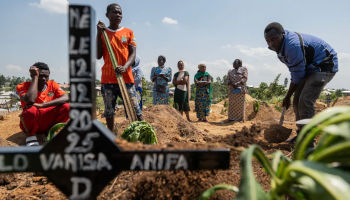
A senior provincial health response official said contact tracing teams have expanded field operations in multiple high-incidence zones in Ituri, noting that the investigation is prioritising a funeral identified as a possible early transmission event due to high attendance and limited infection prevention measures. An epidemiologist supporting the outbreak response said ongoing genomic sequencing and retrospective case tracing are being used to reconstruct transmission chains and determine how long undetected spread may have occurred before confirmation on 15 May.
Field reports from affected health zones describe increased activity at isolation units, with healthcare workers managing fluctuating admissions and community screening points operating under sustained pressure. Movement restrictions and community surveillance have been reinforced in several localities as authorities attempt to limit further spread into densely populated areas.
The outbreak has placed significant strain on public health infrastructure in eastern Democratic Republic of Congo, where repeated Ebola outbreaks have historically been linked to mobility patterns, community gatherings, and healthcare access limitations. Officials noted that delayed detection remains a key challenge in remote areas with limited laboratory capacity and logistical constraints.
The ongoing investigation is now integrating epidemiological fieldwork, laboratory confirmation, and cross-border coordination between Congolese and Ugandan health authorities. Public health teams continue to prioritise containment measures while refining the timeline of initial infections.
The evolving situation underscores persistent vulnerabilities in outbreak detection systems and the regional implications of highly mobile transmission networks across eastern Africa, where health authorities continue efforts to interrupt chains of infection and stabilise affected communities.