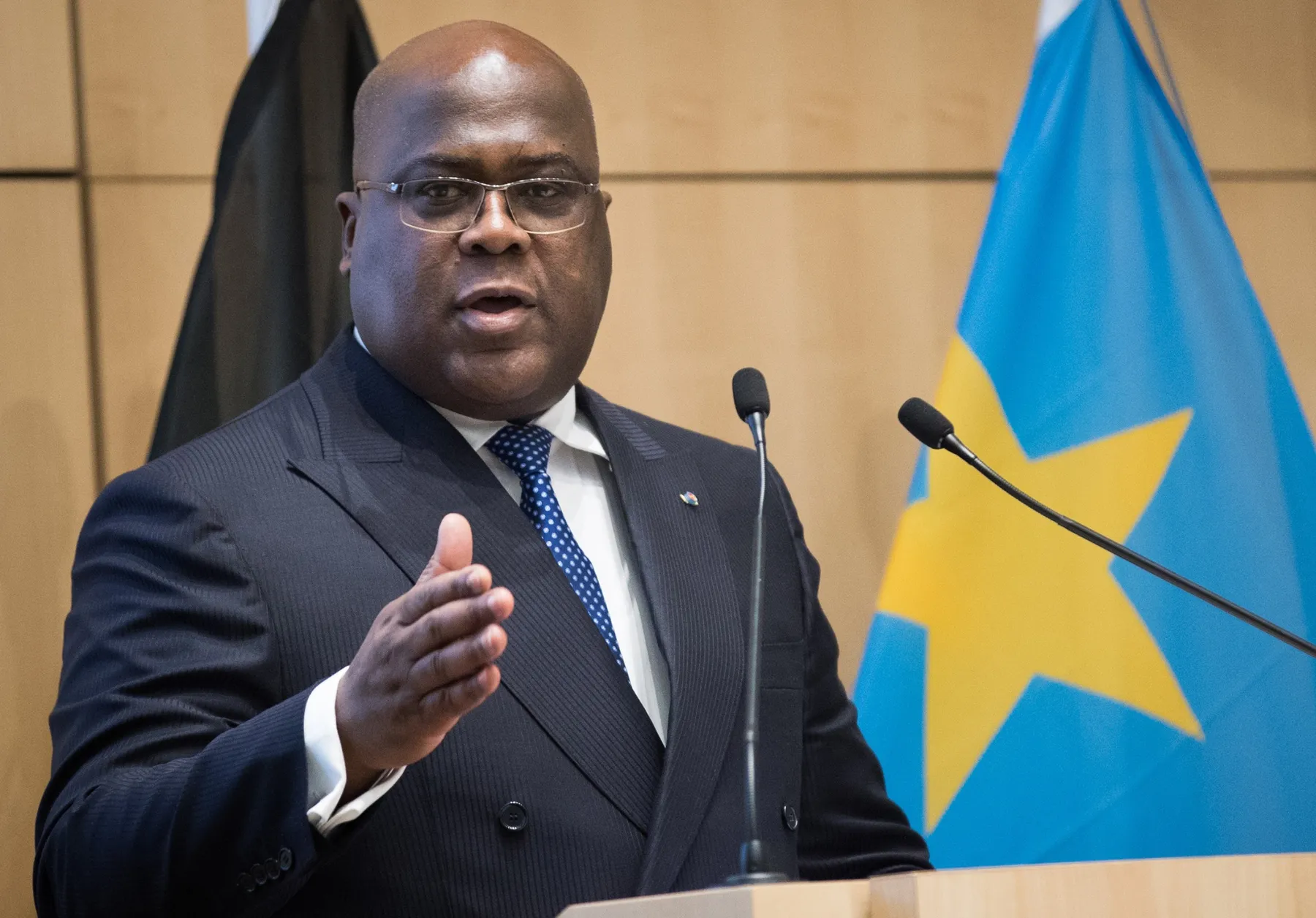
Kinshasa (Diplomat.so) - Félix Tshisekedi, President of the Democratic Republic of the Congo, ordered a comprehensive audit of mining export revenues and state assets in Kinshasa on Tuesday, April 28, citing systemic losses despite record mineral exports.
Cabinet minutes reviewed this week indicate that the directive targets governance failures across the mining sector in the Democratic Republic of the Congo, one of the world’s leading producers of cobalt and copper. The audit, to be completed within 30 days, seeks to identify unpaid revenues, opaque joint ventures, and financial leakages linked to capital flight and fraudulent trade practices.
"The president has made it clear that every dollar generated from our natural resources must be accounted for,” said Finance Ministry spokesperson Jean-Baptiste Mbuyi in a briefing. "Weak oversight structures have significantly undermined state revenue collection.”
At the Ministry of Mines headquarters in Kinshasa, officials were seen reviewing export documentation under heightened security. Long queues of company representatives formed outside regulatory offices, reflecting what one mining executive described as "a sudden tightening of compliance requirements.”
According to figures presented during the cabinet meeting, Congo exported approximately 3.4 million metric tons of copper in 2025, up from 3.1 million in 2024, alongside around 220,000 tons of cobalt. However, exports declined in early 2026, with about 955,000 tons of copper shipped between January and March, compared to 1.09 million tons during the same period last year.
Despite these volumes, a state audit previously found that major mining firms underreported an estimated $16.8 billion in revenues between 2018 and 2023. Analysts say such discrepancies highlight longstanding governance challenges.
"Congo’s mineral wealth has not translated into broad economic gains due to structural inefficiencies and corruption risks,” said Chantal André, a Kinshasa-based extractive industries analyst. "This audit could be a turning point if enforcement mechanisms are credible.”
Tshisekedi also ordered the integration of customs systems, port authorities, the central bank, and commercial banks into a unified digital tracking framework. The measure aims to ensure that all mineral exports and imports are traceable through a single chain, with initial findings expected by June 15.
On the ground, local residents expressed cautious optimism. "We see trucks leaving every day with minerals, but our communities remain poor,” said Jean Patrice, a resident of the mining region of Lualaba. "If this audit brings transparency, it could help people here.”
The reforms come as Congo strengthens ties with global powers, including separate mineral agreements with the United States and China, both seeking secure access to critical resources for clean energy and electric vehicle production.
The audit and accompanying enforcement measures are expected to test the government’s ability to balance foreign investment interests with domestic accountability, a challenge central to Congo’s economic future.