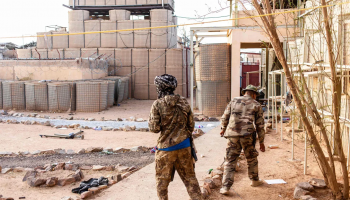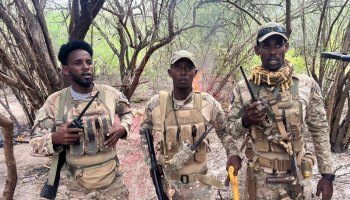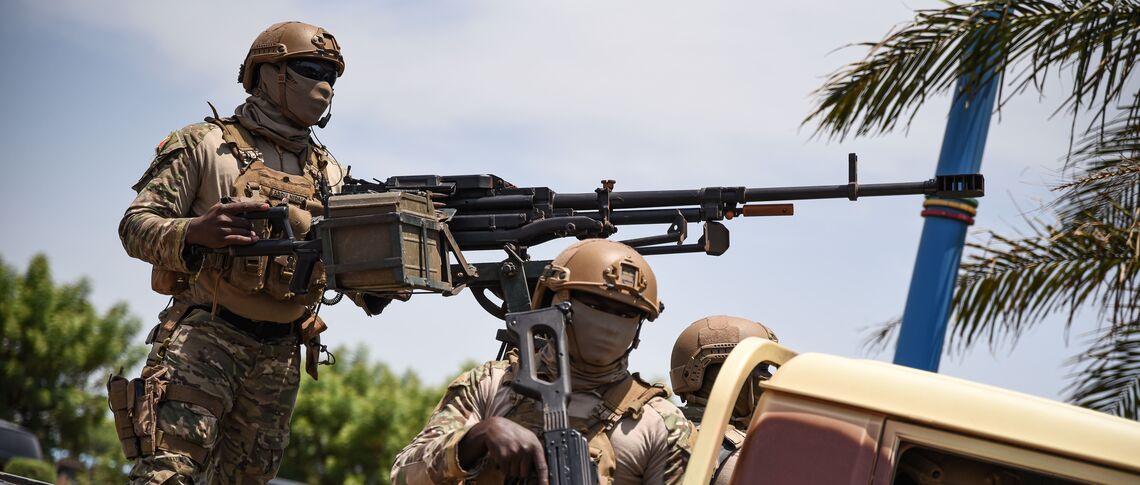
Bamako (Diplomat.so) – Russian-linked paramilitary elements associated with the Wagner Group, described as the "African Corps" under the Russian Defense Ministry, said on Saturday, 25 April, they were engaged in a "general battle for Mali" alongside Malian forces against armed groups across multiple regions.
The statement, circulated through affiliated channels, asserted that joint Russian and Malian units were confronting coalitions that include Jama'at Nasr al-Islam wal Muslimin and allied factions. It referenced intense fighting in Bamako, Kidal, Gao, and Sévaré, describing the overall security environment as "extremely tense.”
However, parallel field accounts from local observers and regional sources indicate a more fragmented operational picture. Reports suggest that both Russian-linked fighters and Malian army units have withdrawn from certain contested zones in recent days, particularly in northern areas where armed movements are advancing.
A local community leader in Gao, Sékou Amadou, told Diplomat News Network that "the situation is changing quickly, and control on the ground is unclear from one day to the next.”
Additional developments point to movements by the Azawad Liberation Front, with unverified reports indicating a push toward Timbuktu, a historic city now described by residents as increasingly isolated. "Supply routes are disrupted, and there is a sense of encirclement,” said a transport worker reached by phone, speaking on condition of attribution.
In Bamako, the situation remains opaque. Witnesses described unusual activity overnight, including sporadic vehicle movements and heightened security presence near key government installations.
A shopkeeper in the capital, Mariam Oumar, reported "a noticeable absence of regular patrols in some districts,” adding that "people are staying indoors and waiting for clarity.”
More sensitive claims have emerged regarding the alleged entry of several hundred fighters linked to the Macina Liberation Front, part of the broader JNIM coalition, into Bamako. These reports remain unconfirmed, and Malian authorities have not issued a detailed public account of the capital’s current security posture.
The evolving situation reflects a complex overlap between official narratives and field-level dynamics. Authorities and allied forces portray a decisive confrontation with insurgent groups, yet developments on the ground suggest fluid frontlines and possible redeployments. Analysts note that such discrepancies are not uncommon in asymmetric conflicts, where information gaps and competing claims shape public understanding.
The stakes remain high for Mali and the wider Sahel region, where shifting alliances and territorial control directly affect civilian security, humanitarian access, and regional stability. The coming days are expected to clarify whether the current escalation represents a coordinated offensive or a broader phase of strategic repositioning.