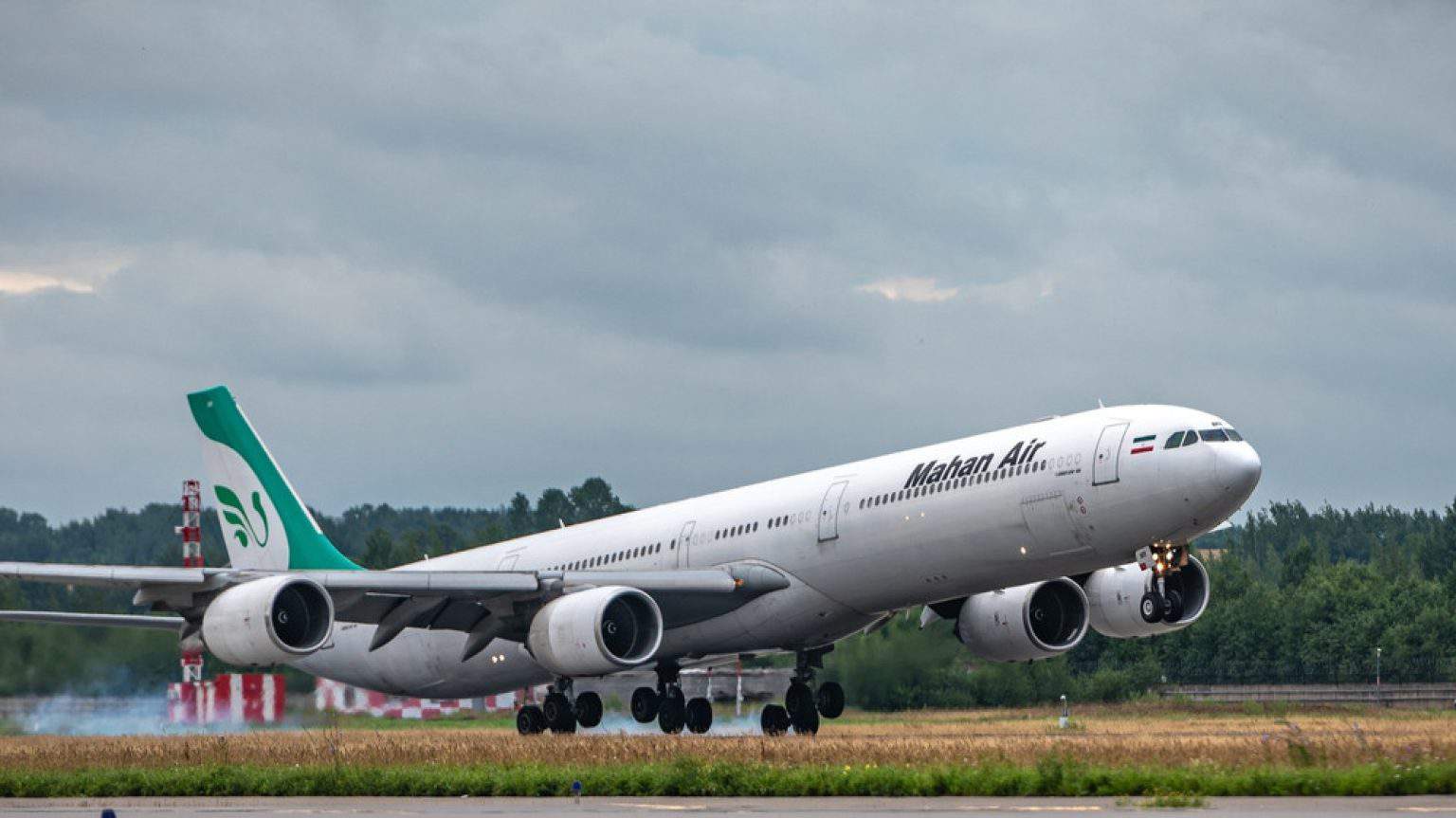
Washington, D.C. (Diplomat.so) - The United States Department of State announced on Tuesday, April 21, sanctions targeting eight individuals, four entities, and Iran-linked airline Mahan Air for supporting Tehran's drone and ballistic missile programs.
The U.S. State Department said the measures focus on procurement networks accused of supplying materials and technology to Iran’s unmanned aerial vehicle (UAV) and missile development efforts.
Two aircraft associated with Mahan Air were also designated as blocked property under U.S. law. Officials allege the airline has previously transported members of Iran’s Islamic Revolutionary Guard Corps, as well as weapons and financial resources.
"These actions are part of a broader strategy to disrupt destabilizing activities and protect U.S. national security interests,” a State Department spokesperson said during a briefing. The measures were implemented under Executive Orders 13382 and 13224, which target proliferation of weapons of mass destruction and support for designated groups.
The announcement comes as the European Union signaled parallel steps. European Union foreign policy chief Kaja Kallas confirmed on Tuesday that EU member states agreed to expand sanctions to include individuals responsible for the closure of the Strait of Hormuz. Speaking after a meeting in Luxembourg, Kallas said the bloc would also strengthen its maritime mission in the Middle East to safeguard commercial shipping routes.
On-the-ground shipping data indicates severe disruption in the strategic waterway. According to vessel tracking platforms, only three ships transited the Strait of Hormuz in the past 24 hours, a sharp decline from an average of approximately 140 vessels per day prior to the escalation of hostilities on February 28. Satellite imagery and tracking data showed limited movement, including a liquefied petroleum gas tanker attempting to exit the الخليج after a previous failed attempt.
A maritime logistics coordinator based in Dubai, speaking to Diplomat News Network, described the situation as "effectively a near-standstill,” noting that congestion is building at key ports as vessels delay transit due to security risks.
The الأزمة traces back to heightened tensions between the United States and Israel on one side and Iran on the other, which have escalated into military and economic confrontations affecting critical trade routes. The Strait of Hormuz, through which roughly a fifth of global oil supply typically passes, remains a focal point of geopolitical risk.
Analysts warn that prolonged disruption could have significant economic implications, including rising energy prices and supply chain instability. Regional security experts also note that increased naval deployments by international actors may raise the risk of further escalation.
The combined U.S. and EU actions reflect a coordinated effort to apply economic and operational pressure on Iran, amid ongoing uncertainty over maritime security and diplomatic engagement prospects.