Nairobi (Diplomat.so) - Kenya's President William Ruto on Friday confirmed that the long-shuttered Kenya–Somalia border will reopen in April, marking a significant policy shift after more than a decade of closure prompted by cross-border attacks by the militant group al-Shabaab.
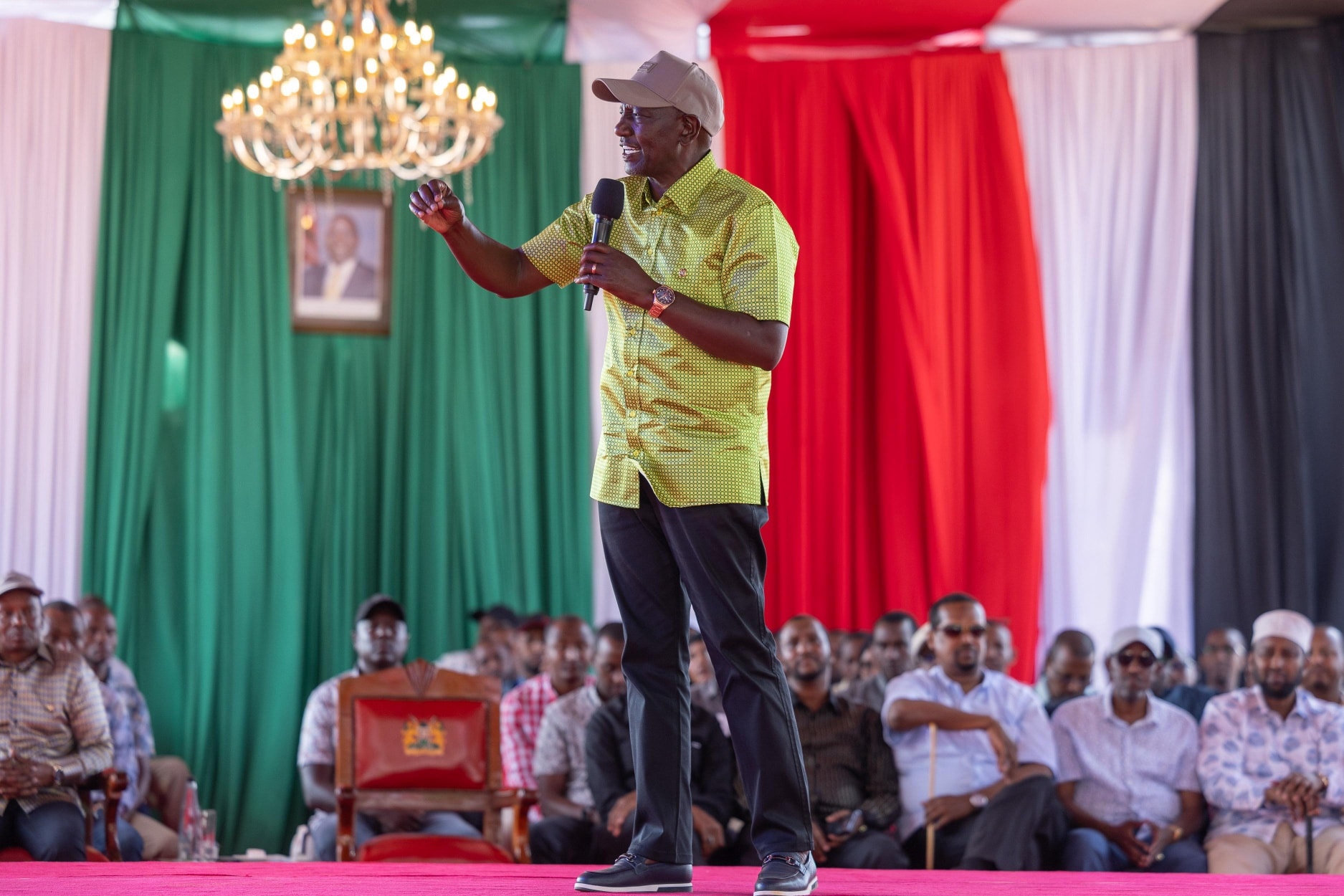
Speaking during a tour of Mandera County in northeastern Kenya, Ruto said two official crossing points along the frontier will resume operations under heightened security surveillance. "After extensive security assessments, we have agreed to reopen the border in a structured manner,” Ruto told local leaders in Mandera. He added that Kenya would maintain a "heavy security presence” to deter weapons smuggling and militant infiltration.
During his address in Mandera, President William Samoei Ruto framed the decision as both a security and humanitarian imperative.
"It is unacceptable that fellow Kenyans in Mandera remain cut off from their kin and neighbours in Somalia due to the prolonged closure of the Mandera Border Post,” Ruto said. "Accordingly, we will reopen the border post in April, restoring connectivity and revitalising cross-border trade for the mutual prosperity of our people.”
The president linked the reopening to broader economic stabilization efforts in the drought-affected county. To tackle persistent electricity shortages, he announced that the government will install a 3-megawatt generator in the short term while accelerating plans to connect Mandera to the Ethiopian power grid for a more sustainable supply.
Beyond ongoing food relief distribution across the drought-stricken Northern Frontier, Ruto said the government is also supplying animal feed to protect livestock, which he described as "the economic backbone of families in the region.”
At Mandera Stadium, he presided over the disbursement of KSh63 million (approximately $490,000) under the NYOTA Business Start-Up Capital program to 2,520 beneficiaries. The funding, he said, will empower young entrepreneurs to launch enterprises, expand employment opportunities and stimulate Mandera’s local economy ahead of the border’s reopening.
Kenya closed the 680-kilometer frontier in 2011 following repeated retaliatory attacks by al-Shabaab after Nairobi deployed troops to Somalia under the African Union peacekeeping mission. The most deadly incidents included the 2013 Westgate Mall attack in Nairobi that killed 67 people and the 2015 Garissa University attack, where at least 140 students died.
A similar reopening announcement in 2023 was shelved amid renewed security threats. Analysts told Diplomat News Network that the gradual reopening underscores deepening bilateral security collaboration, with authorities on both sides implementing coordinated patrols and surveillance measures to support a stable and secure border environment.
Ruto’s predecessor, Uhuru Kenyatta, initiated construction of a border wall in 2015 intended to span the entire frontier. Official figures show that approximately $35 million was spent over three years, yet only about 10 kilometers were completed before the project stalled.
In Mandera—where families and traders have been separated for nearly 15 years—local business leaders welcomed the decision. Ruto emphasized that reopening the crossings would formalize trade flows, reduce contraband activity, and strengthen economic ties with Somalia.
Security officials say troop deployments will be reinforced to counter any renewed insurgent threats as the reopening approaches.