Addis Ababa (Diplomat.so) - Ethiopia's Ministry of Foreign Affairs accused the Sudanese Armed Forces on Tuesday, May 5, of arming and financing Tigray-linked forces and facilitating cross-border movements along Ethiopia's western frontier, as Sudan separately alleged Ethiopian involvement in drone strikes and raised claims of external support linked to the United Arab Emirates.
The Ethiopian statement, issued through the Ministry of Foreign Affairs and published on its official social media channels, rejected what it described as "baseless accusations” by Sudanese military officials while simultaneously alleging that Sudanese actors have enabled armed movements it referred to as "mercenaries” operating near the shared border. The remarks come amid escalating diplomatic tensions between Addis Ababa and Khartoum, with both sides exchanging accusations over cross-border security incidents and regional instability narratives.
Ethiopian Allegations Against Sudan
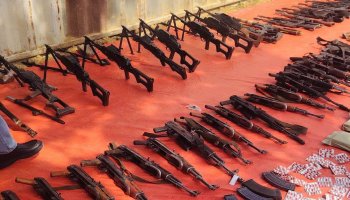
The Ethiopian Foreign Ministry stated that elements within Sudan had provided "weapons and financial support” to fighters linked to the Tigray political and military structures, alleging that such assistance had contributed to "incursions along Ethiopia’s western frontier.”
In its statement, the Ministry said: "The Sudanese Armed Forces have also provided weapons and financial support to these mercenaries, facilitating their movements along the western border of Ethiopia.”
Residents in border-adjacent areas in western Ethiopia described increased security patrols in recent days. "We see more soldiers now than before. People are worried because no one knows what will happen next,” said a local trader in Metemma, who requested anonymity due to security concerns.
Drone Strike Claims
Sudanese authorities have simultaneously accused Ethiopia of involvement in drone strikes targeting infrastructure inside Sudan, including Khartoum International Airport and military installations in the capital region.
Sudan’s Foreign Minister, Mohieddin Salem, stated at a press briefing in Khartoum: "If necessary, we are ready for a direct confrontation. The dignity of the Sudanese people is above all else.”
Sudanese military sources reported drone attacks on multiple sites, including the Wadi Sayyidna base in Omdurman, while confirming that some projectiles landed near civilian neighborhoods. The Sudanese government also accused external actors of supporting paramilitary forces and facilitating the use of foreign fighters, including claims involving Colombian and Ugandan personnel.
Sudanese officials also alleged that external actors, including the United Arab Emirates, were involved in arming and financing the Rapid Support Forces (RSF), a Sudanese paramilitary force formerly operated by the Sudanese government, as well as claims that foreign fighters from Colombia and Uganda were being brought in. These allegations have not been independently verified, and neither Ethiopia nor the United Arab Emirates has publicly commented on or confirmed or denied the claims.
A Sudanese security analyst, speaking from Port Sudan, said: "The information environment is highly polarized. Each side is linking external actors to internal battlefield developments without clear verification.”
Allegations Involving Harar Meda Air Base
Sudanese authorities alleged that Ethiopian territory, including facilities near Harar Meda Air Base in Bishoftu, was being used in coordination with foreign-supported networks linked to the ongoing conflict in Sudan.
Harar Meda Air Base, the primary installation of the Ethiopian Air Force located south of Addis Ababa, was referenced in Sudanese claims as part of what officials described as logistical or operational support structures involving external partners.
Sudanese officials have also claimed that the United Arab Emirates contributed to financing and facilitating armed activity in Sudan, pointing to possible regional air and land linkages supporting such operations. These assertions remain unverified, and neither Ethiopia nor the United Arab Emirates has issued any public statement confirming, denying, or addressing the claims.
A regional aviation analyst based in Nairobi noted that "Harar Meda is a tightly controlled military airbase, and any allegation involving foreign operational use would require verifiable satellite, logistical, or intelligence confirmation before being treated as fact.”
Residents near Bishoftu described heightened military activity but said there was no visible change linked to foreign presence. "It is a military area. We only see Ethiopian forces, nothing else,” said a local shopkeeper.
Counter-Accusations
Ethiopia’s Ministry of Foreign Affairs strongly rejected Sudan’s allegations, calling them "unfounded and deliberately distortive.” The Ministry emphasized that Ethiopia has historically supported Sudanese stability and continues to advocate for peaceful resolution mechanisms.
"The Ministry notes with concern that elements within Sudan have been actively supporting armed groups and facilitating incursions into Ethiopian territory,” the statement said, adding that these actions were part of what it described as "a broader anti-Ethiopian agenda driven by external patrons.”
Officials in Addis Ababa further urged dialogue and a civilian-led political process in Sudan, reiterating Ethiopia’s position in favor of regional stability and non-interference.
Tigray Context
The current diplomatic dispute is closely linked to unresolved tensions surrounding the Pretoria Agreement, signed in November 2022 between the Ethiopian federal government led by Prime Minister Abiy Ahmed and the Tigray People’s Liberation Front (TPLF), which ended a two-year conflict in northern Ethiopia.
The agreement provided for the cessation of hostilities, humanitarian access, and disarmament of TPLF forces. However, key implementation issues remain contested, particularly regarding the return of internally displaced persons and territorial administration in western Tigray.
While the agreement formally ended large-scale fighting that resulted in significant casualties—estimates cited by African Union assessments suggest hundreds of thousands of deaths—it did not fully resolve political and territorial disputes between Addis Ababa and regional authorities.
Legal and Terminology Dispute Over "Mercenaries”
The Ethiopian reference to "mercenaries” has drawn attention from legal analysts, who caution that international law defines mercenaries as foreign fighters motivated primarily by private gain and not affiliated with a party to the conflict.
Given that Tigray-affiliated forces are composed largely of Ethiopian nationals, the terminology has raised questions regarding its legal applicability.
International law scholar Genet Yohannes noted in a regional security briefing that "the use of the term mercenary in internal armed conflicts is legally sensitive and often contested, particularly where actors are citizens of the state in question.”
Analysts also warn against conflating domestic armed opposition groups with foreign mercenary classifications, as such framing may complicate diplomatic mediation efforts.
Security Dynamics
The escalating exchange of accusations between Ethiopia and Sudan reflects broader instability across the Horn of Africa, where overlapping conflicts in Sudan, Ethiopia, and the Red Sea corridor continue to influence regional security calculations.
Security experts say the rhetoric highlights growing mistrust between two historically interconnected states that share economic, cultural, and border ties.
A regional analyst based in Nairobi said: "Both governments are increasingly using external attribution narratives to frame internal security challenges. This raises the risk of miscalculation unless diplomatic channels are strengthened.”