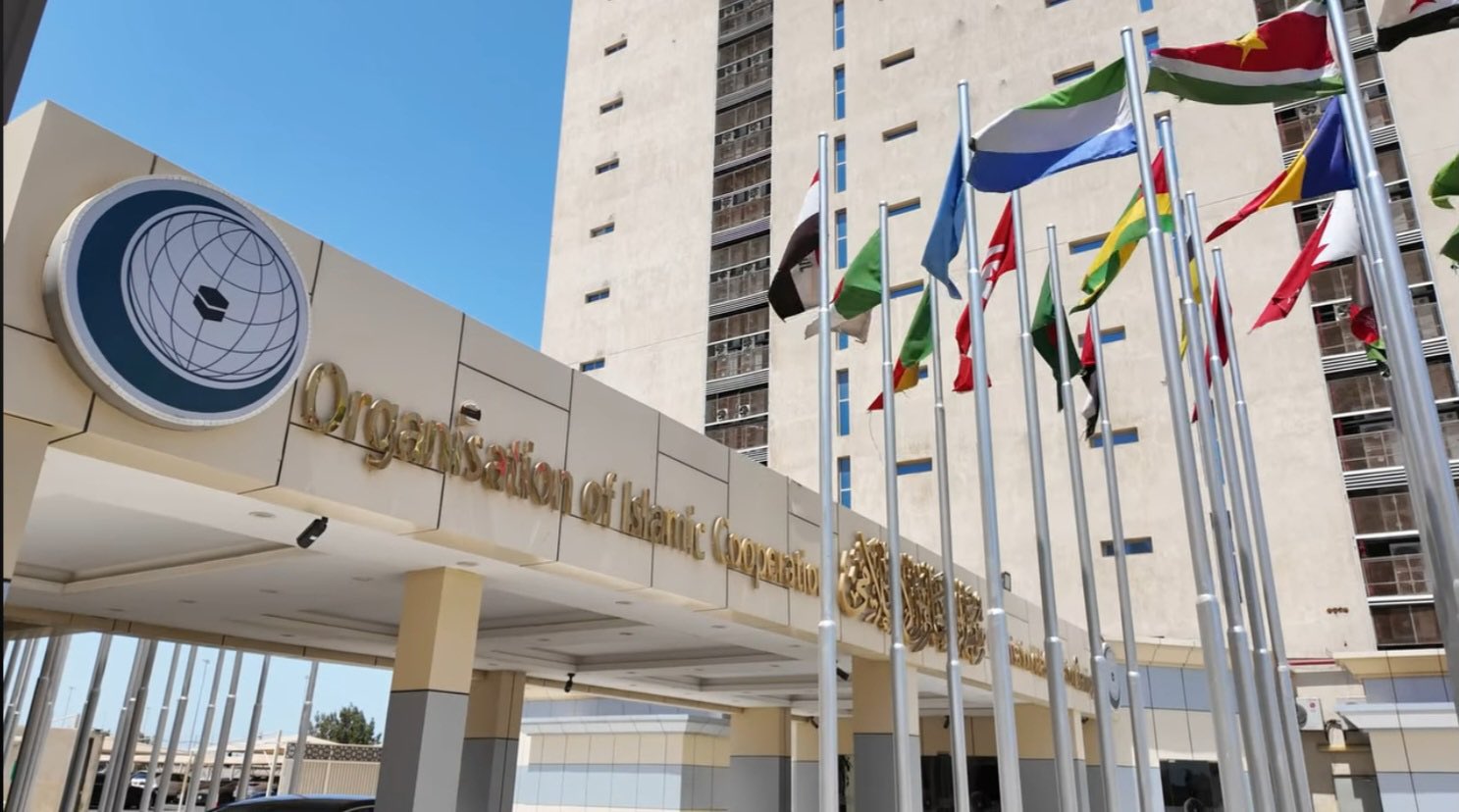
Jeddah (Diplomat.so) – The Organisation of Islamic Cooperation (OIC) General Secretariat strongly condemned Israel's announcement on Thursday, April, to appoint a diplomatic envoy to the so-called Somaliland region located in the northwestern region of the Federal Republic of Somalia, describing it as a violation of Somalia's sovereignty, territorial integrity, and national unity.
OIC Rejects Diplomatic Appointment
The Organisation of Islamic Cooperation (OIC) General Secretariat stated that the reported Israeli decision undermines internationally recognized borders and contradicts the United Nations Charter, which upholds the sovereignty and territorial integrity of member states as a core principle of international law.
In its official statement, the OIC referred to Israel as "the occupying power” and stressed that any unilateral diplomatic engagement affecting the territorial integrity of a member state is inconsistent with established international legal norms.
"The announcement constitutes a clear breach of respect for the sovereignty and territorial integrity of Somalia,” the statement said.
An OIC diplomat familiar with internal consultations told Diplomat News Network, speaking on condition of attribution, that member states considered the development "sensitive and potentially destabilizing,” adding that the organization maintains a consistent position against actions perceived to alter recognized borders without the consent of the affected state.
Officials at the OIC headquarters in Jeddah described internal discussions following the announcement as routine but closely monitored, reflecting the diplomatic sensitivity of the issue among member states.
Somalia Rejects Israeli Move
In Mogadishu, the Federal Government of Somalia issued a strong rejection of Israel’s reported decision, describing it as an infringement on national sovereignty and international law.
The Ministry of Foreign Affairs stated that the self-declared entity calling itself "Somaliland,” located in the northwestern region of Somalia, remains an integral part of the Federal Republic of Somalia and that any attempt to establish diplomatic relations outside the authority of the federal government is "null and without legal basis.”
"The Federal Republic of Somalia categorically rejects any attempt to confer diplomatic or political recognition on any part of its territory outside the authority of the Federal Government,” the ministry said.
A senior official from the Somali foreign ministry, speaking to Diplomat News Network, said Somalia would intensify diplomatic engagement with international partners to ensure "respect for sovereignty and adherence to international law.”
The official added that Mogadishu expects reaffirmation from international institutions, including the African Union, the United Nations, the Organization of Islamic Cooperation, and the European Union, in support of Somalia’s territorial integrity.
Public Reaction in Mogadishu
In Mogadishu, residents expressed concern about the diplomatic implications of the development and its potential regional impact.
Near Maka Al-Mukaramah Road, one of the city’s busiest commercial areas, small groups gathered discussing the OIC statement as it circulated through local media and online platforms.
Abdirahman Hassan, a secondary school teacher, said the situation reflects broader instability concerns in the Horn of Africa. "Any illegal recognition creates uncertainty in this region. People are focused on stability, trade, and security,” he said.
University student Hiba Nur said such international decisions are closely followed in Somalia due to their political implications. "When foreign governments take positions involving the self-declared entity calling itself ‘Somaliland,’ located in the northwestern region of Somalia, such actions risk exacerbating clan tensions, fueling internal divisions among Somalis, and undermining ongoing peacebuilding efforts and the country’s broader recovery process,” she said.
Status of Somaliland in Northwestern Somalia
The entity calling itself "Somaliland,” located in the northwestern region of Somalia, declared unilateral separation from Somalia in 1991 following the collapse of the central government of Somalia. It has since established its own governing institutions and administrative structures.
Despite its internal political arrangements, it remains unrecognized by any United Nations member state. The Federal Government of Somalia continues to assert sovereignty over the entire territory of the country, including the northwestern region where the separatist administration operates.
Most international institutions maintain recognition of Somalia’s territorial integrity within its federal framework. Within the northwestern region, six major clans are widely reported to reside there, with five of them generally supporting national unity and opposing separatism, while one clan forms the primary support base of the separatist administration. Members of these communities, including those from the separatist clan, are also represented across federal institutions, including both houses of Parliament, the Judiciary, and other branches of the Federal Government of Somalia.
These institutional and social linkages reflect continued integration within Somalia’s national framework. Efforts toward unity, reconciliation, and state-building remain central to Somalia’s political process, with successive administrations emphasizing inclusive governance, power-sharing, and the strengthening of federal institutions as key pillars for long-term stability, national cohesion, and sovereignty.
Regional Diplomatic Context
The Horn of Africa remains a strategically sensitive region marked by overlapping political, security, and economic challenges, including counterterrorism operations, maritime security concerns, and regional geopolitical competition.
Diplomatic analysts note that engagement with entities claiming independence within internationally recognized states often triggers broader disputes over recognition and sovereignty principles.
A regional affairs analyst based in East Africa, speaking generally, said such developments "test the balance between diplomatic engagement and respect for established international borders,” particularly in fragile or post-conflict states.
International Legal and Institutional Framework
The OIC position aligns with principles outlined in the United Nations Charter, which emphasizes respect for sovereignty, territorial integrity, and non-interference in the internal affairs of member states.
Somalia continues to rely on multilateral institutions to reinforce its territorial claims and to discourage unilateral diplomatic engagements involving the self-declared entity in the northwestern region of the country.
International organizations have historically recognized the Federal Republic of Somalia as the sole sovereign authority within its internationally recognized borders.