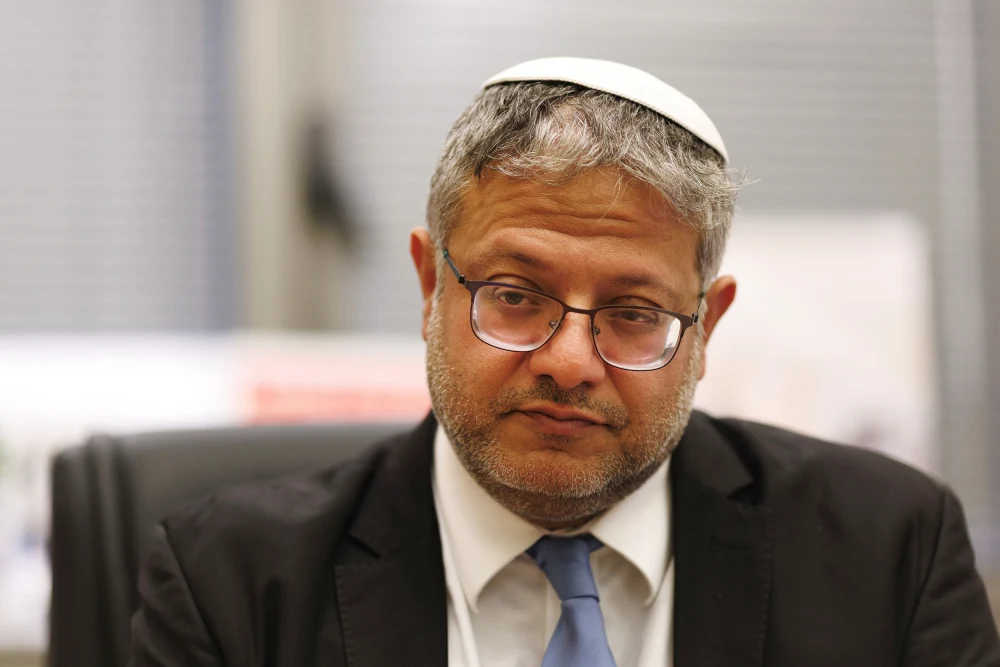
Tel Aviv (Diplomat.so) – The Israeli Supreme Court on Thursday, issued an interim order restricting National Security Minister Itamar Ben Gvir's authority over police appointments and public statements, in a politically sensitive case involving the government and its legal adviser.
The ruling places immediate constraints on Ben Gvir’s role in senior police promotions and sensitive law enforcement appointments, requiring that such decisions proceed only with recommendations from top police leadership and prior notification to the government’s legal adviser, who retains the authority to submit formal opinions.
The court also restricted the minister from issuing public statements related to police use of force against civilians, including comments on ongoing investigations, in an effort to limit perceived political interference in operational policing.
According to court proceedings summarized by Israeli media, the justices set a deadline for the government, Ben Gvir, and the attorney general’s office to reach a negotiated framework by early May 2026, with a mandatory update to the court on whether agreement has been achieved or whether disputes remain unresolved.
The court indicated that failure to reach compromise could lead to more decisive judicial intervention, including consideration of removal measures.
Ben Gvir’s legal representative informed the court that the minister would reject any negotiation process if interim restrictions were imposed, and instead demanded a final ruling on the matter. The statement reflected heightened tensions between the executive branch and the judiciary over the scope of ministerial authority in policing policy.
Outside the courtroom, reactions were measured but visibly divided among observers and legal professionals. A Jerusalem-based legal analyst speaking on condition of attribution described the ruling as an attempt to "create operational boundaries between political leadership and enforcement agencies during an ongoing constitutional dispute.”
A police officer stationed near the Supreme Court building noted increased security presence and said internal discussions within the force were "focused on maintaining operational continuity despite political uncertainty.” Diplomat News Network spoke with a parliamentary aide who suggested the decision could "reshape the balance of authority between ministers and security institutions if upheld over time.”
The case stems from a request by the attorney general in January 2026 seeking to compel Prime Minister Benjamin Netanyahu to consider Ben Gvir’s dismissal, alleging misuse of ministerial powers to influence police conduct. The government declined to act on the recommendation, prompting judicial escalation. The dispute reflects broader tensions in Israel’s governance framework, particularly over oversight of security institutions and ministerial autonomy.
Analysts in Jerusalem say the ruling underscores an ongoing institutional confrontation between the judiciary and elements of the executive branch, with potential implications for coalition stability and public trust in law enforcement governance.
Legal experts note that the court appears to be pursuing a structured compromise mechanism before resorting to more severe remedies, including potential removal.
The next phase of the process now hinges on whether political and legal actors can reach a binding arrangement before the court’s early May deadline, a development that could determine whether the dispute escalates into a constitutional crisis or stabilizes through negotiated settlement.