Washington, D.C. (Diplomat.so) - United States Army awarded Israeli defense technology company Smart Shooter Ltd. a $10.7 million contract for SMASH 2000 fire-control systems in Washington, D.C. on Monday, to enhance infantry counter-drone capabilities.
The procurement was executed through a U.S.-based defense support contractor and coordinated with a separate military equipment integrator responsible for logistics and delivery.
Defense acquisition officials indicated that initial shipments are expected to begin in the third quarter of 2026, marking a phased rollout across selected units as part of broader counter-unmanned aerial system modernization efforts.
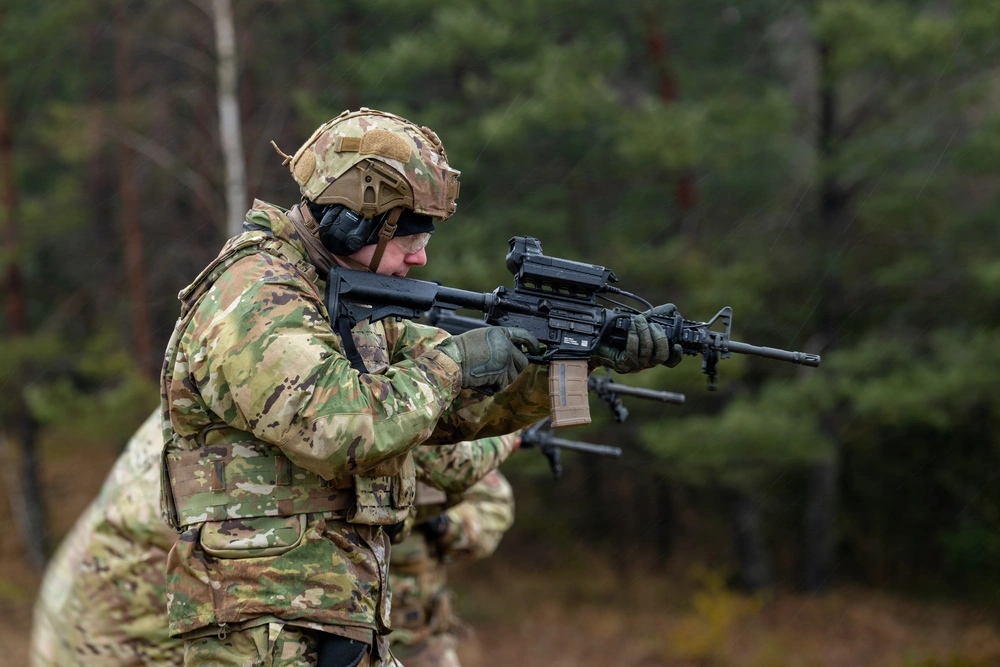
The SMASH 2000 system, also referenced in industry documentation as SMASH 3000, is mounted on standard rifle rails and integrates computer vision with artificial intelligence-driven target tracking.
The system is designed to assist soldiers in engaging fast-moving aerial threats, particularly small unmanned drones, without replacing their existing firearms. It enables real-time tracking and engagement support while maintaining compatibility with standard infantry weapons.
A U.S. defense official, speaking on condition of attribution, said the Army is "prioritizing scalable solutions that allow individual soldiers to respond effectively to low-cost aerial threats without relying exclusively on high-cost interceptors.”
The official added that the system’s modular design allows integration into existing infantry formations without significant retraining requirements.
A defense analyst cited by Diplomat News Network described the contract as part of a broader shift toward distributed counter-drone capability, stating that "battlefield lessons from recent conflicts have made it clear that small drones are now persistent tactical threats rather than occasional anomalies.”
Observations from a defense industry briefing in Washington noted steady attendance from military procurement personnel, contractors, and international defense representatives. Attendees reviewed live demonstrations and system simulations showing drone tracking performance in controlled environments.
A defense conference participant and former infantry noncommissioned officer said the appeal of the system lies in cost efficiency, noting that "engaging a small drone with a missile is operationally unsustainable in most frontline scenarios, so rifle-mounted solutions are gaining attention.”
The growing emphasis on counter-drone technologies follows extensive battlefield use of inexpensive unmanned systems in Ukraine and other recent conflict zones, where small quadcopters have been used for reconnaissance and precision strikes.
Analysts note that these developments have accelerated procurement of layered defense systems combining electronic warfare, kinetic interceptors, and soldier-level targeting aids.
Military procurement specialists say SMASH-type systems reflect a shift toward enabling infantry units to independently neutralize aerial threats without dependence on centralized air defense assets. The approach is seen as particularly relevant for dispersed battlefield environments where rapid engagement decisions are required at the squad level.
The contract underscores continued integration of Israeli-developed defense technologies into U.S. military procurement channels, reflecting long-standing defense collaboration and shared interest in counter-unmanned aerial systems capability development across allied forces.