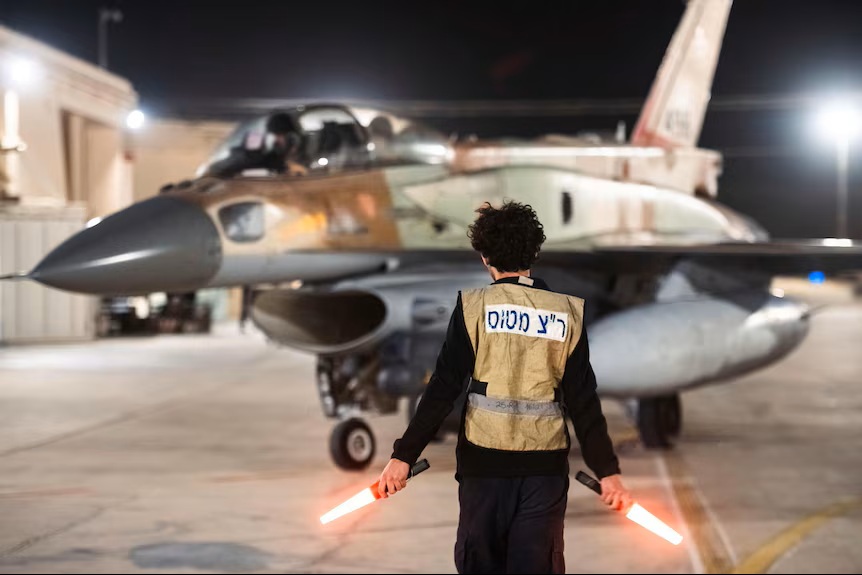
Tel Aviv (Diplomat.so) – The Israel Defense Forces (IDF) said on Sunday, that it is approaching completion of its planned strikes targeting what it classifies as "highest-priority" military objectives across Iran, a spokesperson confirmed.
IDF spokesperson Lieutenant Colonel Nadav Shoshani outlined that the operational target list is divided into categories including ballistic missiles, weapons production facilities, nuclear program sites, and command-and-control centers. Each category is further subdivided into "essential,” "critical,” and "additional” designations. Shoshani told reporters that the army "will be able in the coming days to complete strikes on the highest-priority production targets,” noting that ongoing operations do not signify the exhaustion of all targets. He declined to provide a precise timeline, citing dependence on operational conditions.
Over the past weeks, Israeli airstrikes have hit industrial facilities in Iran, including two steel plants—one of which handled radioactive materials—and the heavy water plant in Arak, according to the International Atomic Energy Agency (IAEA). Shoshani noted that the Arak site had been previously targeted, but fresh intelligence indicated reconstruction efforts.
In parallel, the Iranian Red Crescent reported that combined U.S. and Israeli attacks have killed at least 1,900 people and caused widespread damage to civilian infrastructure, including hundreds of schools and healthcare facilities.
Satellite imagery reviewed by the *Washington Post*, along with assessments from military and defense experts, indicates that Iran’s ballistic missile capabilities have suffered severe damage. Four key missile production sites—Khodjir, Parchin, Hakimiyeh, and Shahroud—along with at least 29 launch sites, sustained major impacts during the first four weeks of the combined campaign. Experts noted that above-ground launch facilities were destroyed, underground missile access temporarily blocked, and new missile production halted, though Iran continues to launch some ballistic missiles.
Analysts noted that complete destruction of Iran’s missile program is unlikely, pointing to the country’s historical ability to rebuild after prior attacks and potential access to external supply chains. Mobile launch platforms remain in use, although exact numbers are uncertain.
Iranian missile production and testing are overseen by the Islamic Revolutionary Guard Corps and the Ministry of Defense, with the targeted sites responsible for fuel production, missile assembly, and launch operations. Satellite imagery confirmed the destruction of at least 88 facilities at the Khodjir complex, 28 structures at Shahroud, 12 at Parchin, and 19 at Hakimiyeh. At least 29 launch bases were also hit, damaging surface structures and tunnel entrances to underground missile caches, significantly reducing launch readiness.
Experts assert that the attacks have temporarily disrupted Iran’s short- and medium-range missile production capacity, though the program remains partially intact and may recover over time.