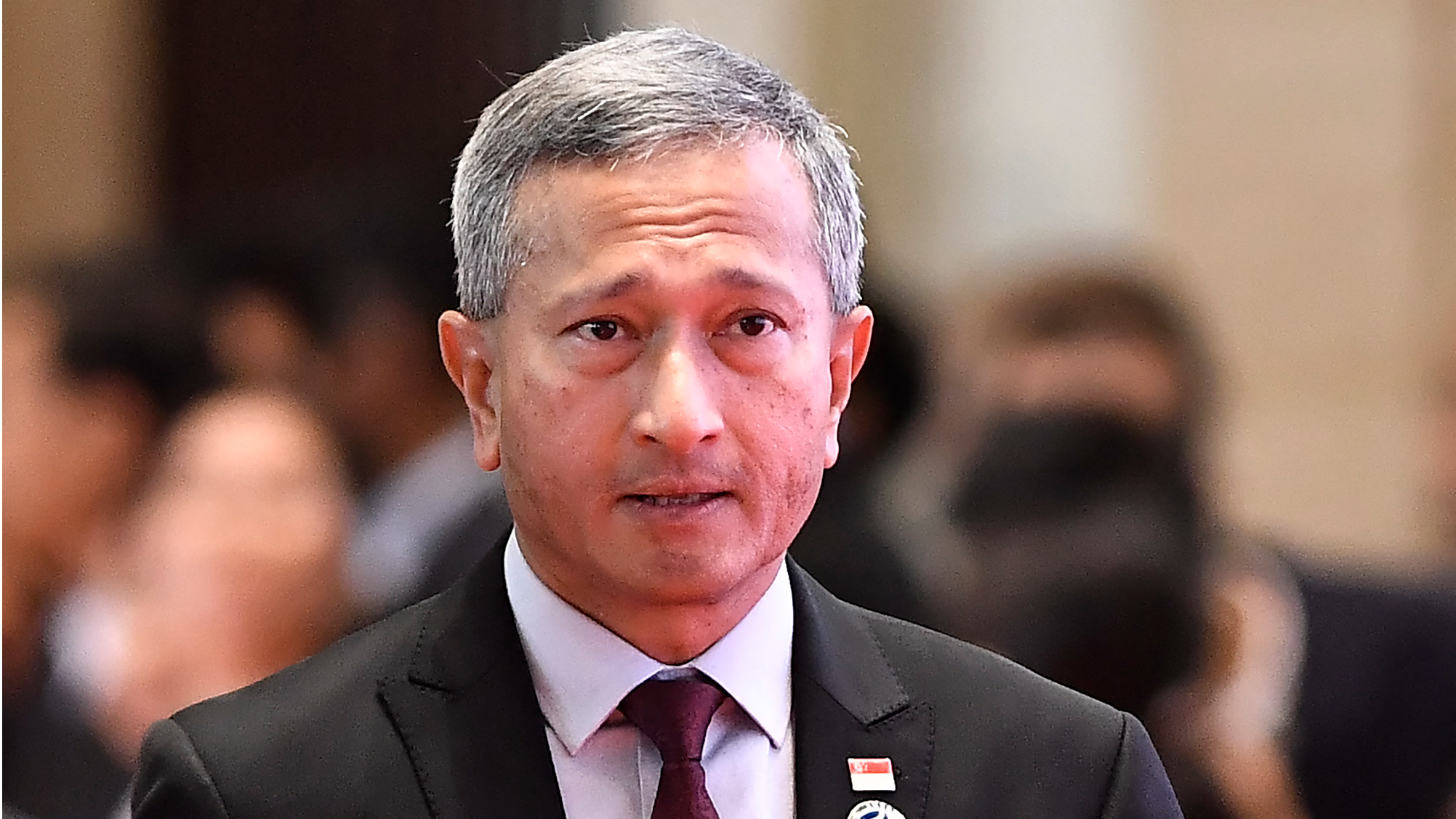
Singapore (Diplomat.so) – Singapore's Minister of Foreign Affairs, Vivian Balakrishnan, warned on Monday, that escalating conflict involving Iran could trigger a severe economic crisis across Asia by disrupting critical energy supplies through the Strait of Hormuz.
Vivian Balakrishnan said the potential closure of the strategic waterway would constitute "an Asian crisis,” citing the region’s heavy reliance on Middle Eastern oil and liquefied natural gas shipments that pass through the narrow maritime corridor. "The Strait of Hormuz is not just a regional chokepoint—it is a global energy artery with direct implications for Asia’s economic stability,” he stated during a policy briefing in Singapore.
According to international shipping and energy data, approximately 20 percent of the world’s oil and liquefied natural gas flows transit through the Strait of Hormuz, making it one of the most critical energy corridors globally. Major Asian economies—including China, India, Japan, and South Korea—depend extensively on Gulf energy imports, leaving them particularly vulnerable to supply disruptions.
Japan is among the most exposed, importing nearly 90 percent of its crude oil through the strait. India and China also rely heavily on Middle Eastern supplies to sustain industrial output and domestic consumption, raising concerns about inflationary pressures and production slowdowns if shipments are interrupted.
Market movements in recent days reflect these concerns. Fuel traders have begun redirecting gasoline shipments from Europe and the United States toward Asia, where tightening supply has driven up prices. Vessel tracking data indicates that at least three gasoline cargoes, totaling approximately 1.6 million barrels, were shipped from Europe to Asia within a single week.
Energy firms including Vitol and TotalEnergies have reportedly moved to capitalize on widening profit margins amid the volatility. Meanwhile, ExxonMobil has secured U.S.-origin gasoline shipments bound for Australia, signaling a broader reconfiguration of global fuel trade routes under mounting geopolitical pressure.
A Singapore-based energy analyst, Ming Daniel, told Diplomat News Network that refiners across Asia are already adjusting output in response to supply uncertainty. "We are seeing reduced refinery runs in parts of Northeast Asia due to concerns over feedstock availability,” he said, adding that alternative sourcing from the United States and Russia is increasing but may not fully offset disruptions.
On the ground, traders and shipping agents in regional hubs reported heightened activity, with increased chartering inquiries and tighter vessel availability. A fuel distributor in Singapore, speaking to Diplomat News Network on condition of attribution, described "longer lead times and rising freight costs” as immediate operational challenges.
The warning underscores broader geopolitical and economic risks tied to energy security in Asia. Any sustained disruption in the Strait of Hormuz could elevate global oil prices, strain supply chains, and test the resilience of economies already navigating inflation and post-pandemic recovery pressures.
The developments highlight the interconnected nature of global energy markets and the strategic importance of maintaining open maritime trade routes, particularly for import-dependent regions like Asia.