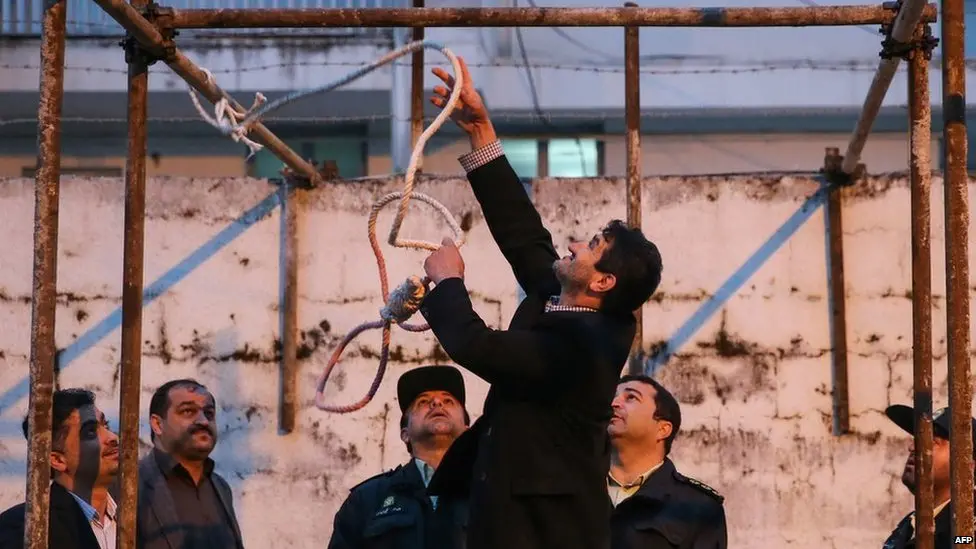
Tehran (Diplomat.so) - Iran's judiciary announced the execution of Amirali Mirjafari in Tehran on Tuesday, April 21, after convicting him of leading a network linked to Israel's Mossad and orchestrating arson during January protests.
According to Mizan News Agency, the official outlet of Iran’s judiciary, Amirali Mirjafari was found guilty of setting fire to a mosque in the capital and conducting activities deemed harmful to national security. The agency reported that the Supreme Court upheld the death sentence, which was carried out in the early hours of Tuesday.
The execution follows closely after Iranian authorities confirmed the execution of two other men on Monday, identified as Mohammad Masoum Shahi and Hamed Validi. Both were accused of collaborating with Mossad and planning attacks inside the country. Judicial authorities stated that the men had allegedly received training abroad, including in the Kurdistan Region of Iraq, and were convicted on charges including "enmity against God” and cooperation with hostile groups.
A senior judiciary official, speaking during a briefing carried by state media, said the executions were conducted "in accordance with legal procedures following final judicial review,” emphasizing that national security offenses are treated with "utmost seriousness” under Iranian law. The official did not provide further operational details regarding the alleged network.
Residents in central Tehran reported heightened security presence in recent days, particularly around government and judicial buildings. One shopkeeper near a courthouse complex told Diplomat News Network that plainclothes officers and patrol units were more visible than usual. "There has been increased monitoring in the area since the announcements began,” he said, declining to be named due to security concerns.
Human rights observers have raised concerns over the pace and scale of executions in Iran. A joint report by Iran Human Rights and Together Against the Death Penalty documented at least 1,639 executions in 2025, marking the highest annual total since 1989. The report indicated a 68 percent increase compared to 2024, when 975 executions were recorded, and noted that 48 women were among those executed.
Mahmoud Amiri, a legal analyst based in Tehran, said the recent cases reflect the judiciary’s prioritization of national security amid regional tensions. "Cases involving alleged foreign intelligence links are prosecuted under the most severe legal provisions,” he said in comments shared with Diplomat News Network. "These proceedings are often expedited due to their perceived threat level.”
Iranian authorities have not disclosed detailed evidence publicly regarding the alleged connections between the executed individuals and Mossad. However, officials maintain that such cases are handled through intelligence coordination and judicial oversight.
International rights groups have repeatedly called for greater transparency in legal proceedings, particularly in capital cases involving security charges.
The broader context includes ongoing tensions between Iran and Israel, with both countries accusing each other of covert operations and destabilizing activities. Analysts note that allegations of espionage and sabotage frequently surface in Iranian domestic security narratives, especially during periods of internal unrest.
The January protests referenced in the case of Amirali Mirjafari were part of a series of localized demonstrations that authorities described as security threats. State institutions have since increased enforcement measures, including arrests and prosecutions tied to alleged foreign influence.
The recent executions underscore the continued use of capital punishment in Iran’s judicial system, particularly in cases involving national security. Observers say the developments may intensify scrutiny from international human rights organizations and further shape diplomatic discourse on Iran’s legal practices and internal security policies.