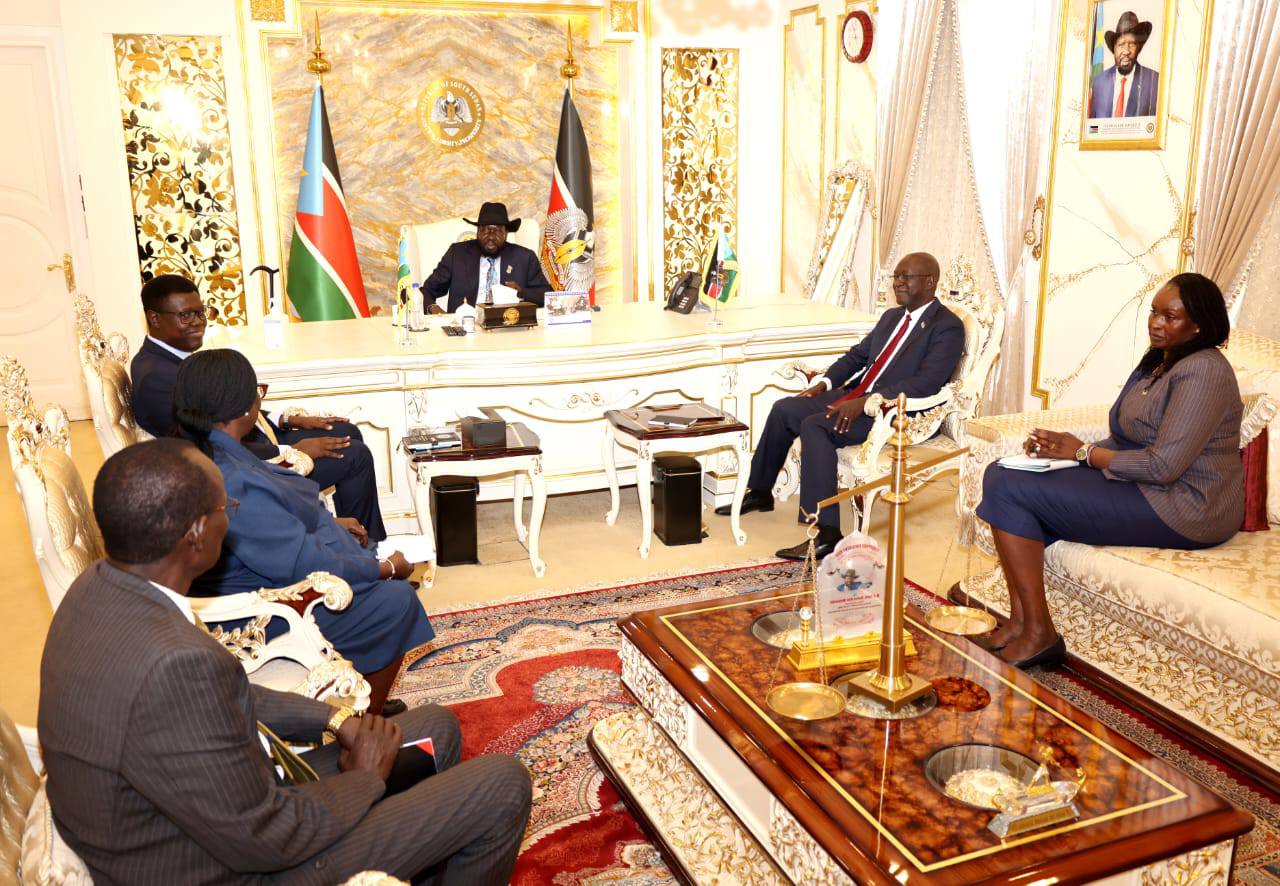
Juba (Diplomat.so) - Salva Kiir Mayardit, President of South Sudan, formally bid farewell to two newly appointed ambassadors tasked with leading key diplomatic missions in India and the United Arab Emirates, underscoring the government's push to expand international partnerships and strengthen bilateral cooperation with strategic global partners.
During a meeting at the presidential office in the capital, Juba, Kiir addressed the diplomats before their departure, reminding them of the oath of service they took and urging them to represent South Sudan with professionalism and dedication.
The president appointed Sitona Abdallah Osman as ambassador to India and Raphael Nhial Kulang as ambassador to the United Arab Emirates. Both postings are viewed by government officials as significant diplomatic assignments because of the growing economic and political ties between South Sudan and the two countries.
India has emerged as an important development partner for South Sudan, contributing to capacity-building programs, education initiatives, and medical training. The United Arab Emirates, meanwhile, has expanded its economic footprint in East Africa through investment in energy, infrastructure, and trade—areas South Sudan hopes to leverage as it seeks economic diversification beyond its oil sector.
Speaking to reporters after the meeting, Ambassador Sitona thanked the president for the confidence placed in the new envoys. "We are grateful to His Excellency the President for entrusting us with this responsibility to serve our country abroad,” she said, adding that the diplomatic team would work to strengthen cooperation and promote South Sudan’s national interests.
Officials present at the farewell meeting said President Kiir emphasized the importance of proactive diplomacy, encouraging the ambassadors to build strong relationships with government institutions, investors, and international organizations in their host countries.
Both envoys pledged to promote South Sudan’s image abroad and deepen bilateral engagement in areas including trade, investment, education, and humanitarian cooperation.