Conakry (Diplomat.so) - Guinea's government said 30 people were killed and 22 injured in Conakry on Sunday, August 23, after heavy overnight rain triggered a landfill collapse that buried nearby homes.
The disaster struck at about 2 a.m. in the Dar-es-Salam neighborhood of Gbessia commune, where a large mound of waste gave way following intense rainfall. The government said six people suffered serious injuries and 16 sustained lighter injuries, describing the casualty figures as provisional.
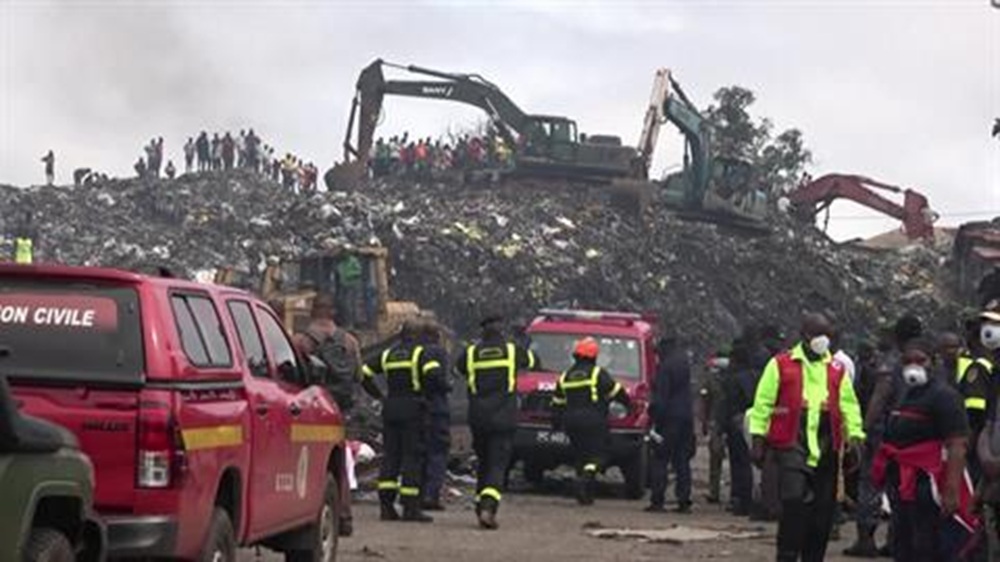
Authorities mobilized rescue personnel, medical teams, security forces and heavy equipment to search for people feared trapped beneath waste and debris. Excavators worked through the collapsed material as residents and emergency workers gathered around damaged homes near the dump.
"Significant human and material resources have been mobilized” to search for people who may remain buried, rescue survivors and recover bodies, the government said. Officials said operations were continuing with support from the Red Cross, defense and security forces, medical personnel and local authorities.
Prime Minister Amadou Oury Bah visited Dar-es-Salam to assess the damage and oversee the government response. Authorities said measures had been taken to provide medical treatment for injured residents and assistance to families affected by the collapse.
Resident Binta Sylla, speaking to reporters at the scene, said five of her children had died. Witness accounts described waste engulfing informal dwellings and reaching an apartment building, illustrating the scale of the collapse in a densely settled area.
The government had announced measures days earlier to evacuate residents and secure areas surrounding the landfill amid concerns that heavy seasonal rainfall could cause landslides. Territorial Administration Minister Djenabou Touré Camara had also announced plans to close the site and relocate waste outside Conakry due to safety risks.
Former Prime Minister and opposition leader Cellou Dalein Diallo, who lives outside Guinea, described the disaster in a public Facebook statement as a national tragedy and expressed concern about the number of victims before authorities issued the updated official toll.
The collapse underscores longstanding risks facing communities living beside major waste sites in Conakry, where rapid urban growth, inadequate infrastructure and seasonal rainfall can combine to expose densely populated neighborhoods to flooding and unstable ground.
Guinea is one of the world’s leading holders of bauxite reserves and possesses major iron ore resources, yet infrastructure and poverty remain significant development challenges. The World Bank reported this year that millions of Guineans continue to live below its lower-middle-income poverty threshold.
Rescue operations remained focused on locating possible victims and clearing debris as authorities assessed damaged homes. The government urged residents to follow emergency instructions and pledged continued medical and material assistance to affected families.